By Bushra Humaira Sadaf, Abdullah Miajy, Abdul Haque, Sharif Ahmed, and Humnath Bhandari

Across Rangpur, Nilphamari, and Dinajpur districts in Bangladesh, small village learning centers are equipping farmers with knowledge, skills, and confidence to innovate, grow their income, and change their communities.
In a small village named Ishwarpur in northern Bangladesh, 30-year-old Hafiza Begum once spent most of her days in household work, caring for her children, and assisting her husband on their small farm. Like many women in rural northern Bangladesh, she had little access to modern agricultural knowledge or know-how. That changed when she attended a vermicompost training at her local Community Learning Center (CLC), established by IRRI under the CGIAR Initiative on Mixed Farming Systems Program.
She received half a kilogram of earthworms and two plastic crates to start her composting unit. She began cautiously, balancing household responsibilities with tending her crates and attending follow-up sessions at the CLC. Within months, her efforts paid off. Now, she manages 12 crates of vermicompost, producing roughly 100 kilograms per month and selling it at 15 BDT per kilogram to local farmers. She plans to scale up production to 1,000 kilograms monthly and train other women, demonstrating how a small intervention can spark community-wide change.

Hafiza’s story is one of many. Across northern Bangladesh, the 12 Community Agricultural Learning Centers established under the CGIAR Initiative on Mixed Farming system in 2024, now supported by the CGIAR Sustainable Science Program, serve as hubs of learning and innovation.
These centers are strategically located across Rangpur, Nilphamari, and Dinajpur districts across northern Bangladesh, reaching thousands of farmers. Each center may include from 60-240 members. Many of the centers are constructed of wood and tin, while three are made of brick and tin. Each center is equipped with tables, chairs, electricity, and bookshelves containing different leaflets, folders, and booklets on crops, livestock, vegetables, fruits, and disease management so that members can access technical knowledge.
The centers offer hands-on training in modern agricultural technologies, livestock management, homestead gardening, composting, and vermicompost production. Training is conducted in partnership with government agencies and research institutes, including the Department of Agricultural Extension (DAE), Department of Livestock Services (DLS), Bangladesh Rice Research Institute (BRRI), Bangladesh Agricultural Research Institute (BARI), Bangladesh Livestock Research Institute (BLRI), youth departments, NGOs, and private firms. Farmers learn production techniques, pest and disease management, post-harvest handling, and value chain development, tailored to their needs following careful assessments through group meetings and focus discussions.

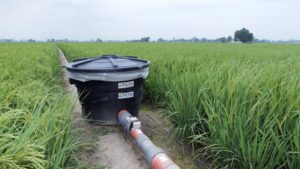
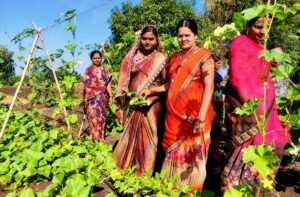
Women are actively involved, often making up around 60% of participants, and specific programs are conducted for them, including beef fattening, improved chicken rearing, and post-harvest processing of crops and vegetables. Youth programs focus on entrepreneurship, mechanization, and modern farming skills. By combining practical guidance with scientific expertise, the CLCs empower farmers to adopt climate-smart practices such as alternate wetting and drying (AWD), direct-seeded rice (DSR), intercropping, and improved fodder cultivation. Mechanization and cost-saving techniques are also introduced to increase efficiency and productivity.

Beyond training, the CLCs serve as community hubs, hosting vaccination campaigns, distributing inputs, and supporting collective marketing of members’ agricultural products. They are managed by elected local committees, ensuring sustainability and community ownership even after external support is discontinued.
The CLCs also act as agricultural knowledge hubs for learning about various crops, livestock production management, and agricultural marketing strategies, supported by regular meetings with personnel from MFS, DAE, BRRI, BARI, BLRI, DLS, NGOs and private sector.
In 2025 the CLCs were able to acomplish the following:
- DAE provided hands-on training on Good Agricultural Practices for different types of crops to CLC members in the Dinajpur, Nilphamari, and Rangpur areas
- BRRI provided hands-on training on AWD to the farmers in Dinajpur
- The youth department of the Bangladesh government provided hands-on training on livestock entrepreneurship development to CLC members in Rangpur, as well as offering credit support
- IRRI provided hands-on training on the development of Local Service Providers (LSPs) for direct seeded rice in Nilphamari
- IRRI also conducted regular monthly meetings with beneficiaries for season-based agronomic information on different crops
- DAE, IRRI, and BRRI provided different types of seeds (rice, vegetables, maize, etc.) to CLC members in their respective villages
Despite many successes, challenges remain. Many centers lack permanent land, have financial constraints for maintenance and electricity, and face cultural barriers that limit women’s participation. Training opportunities are still limited, and expansion requires stronger partnerships with the government and NGOs. Plans are underway to increase membership, formalize operations, develop community-based agribusinesses, and strengthen collaborations to ensure long-term impact.
Like Hafiza Begum, many women and youth are currently being trained in these centers, which can amplify the economic gains of the region. It shows the power of innovation to a thriving enterprise.