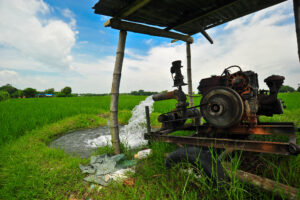
• AWD significantly reduces irrigation water use without compromising yields, but adoption by farmers remain low
• Gravity-fed irrigation systems are hindered by soil and elevation, rigid water governance, and tenant-managed land risks
• Suggested solution pathways include adaptive irrigation schedules, real-time digital monitoring, and carbon financing incentives
By Glenn Concepcion
As climate change intensifies across Asia, the agricultural sector faces a precarious future marked by increasing droughts and unpredictable rainfall. Rice, the staple food for billions, is at the heart of this crisis, consuming roughly 35% of all agricultural irrigation water.
In the Philippines the situation is particularly acute, as conventional rice production has high irrigation demands and is a significant source of agricultural methane emissions due to the practice of continuously flooded paddy fields.
For decades, scientists have been promoting a solution: Alternate Wetting and Drying (AWD). This methodology involves intermittent irrigation, allowing fields to dry periodically rather than staying submerged. While numerous research studies confirm AWD can reduce irrigation water use by up to 50% without compromising yields, its adoption in the country remains frustratingly low, stuck at just around 12% in Philippine national irrigation systems.
A new study published in Agricultural Systems by researchers from the International Rice Research Institute, the Philippine Rice Research Institute, the University of the Philippines, and the University of Queensland investigates the biophysical, social, and institutional obstacles preventing AWD from being more widely adopted.
There are winners and losers in water security
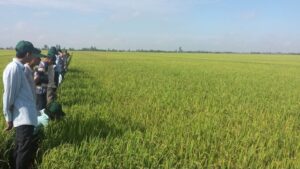
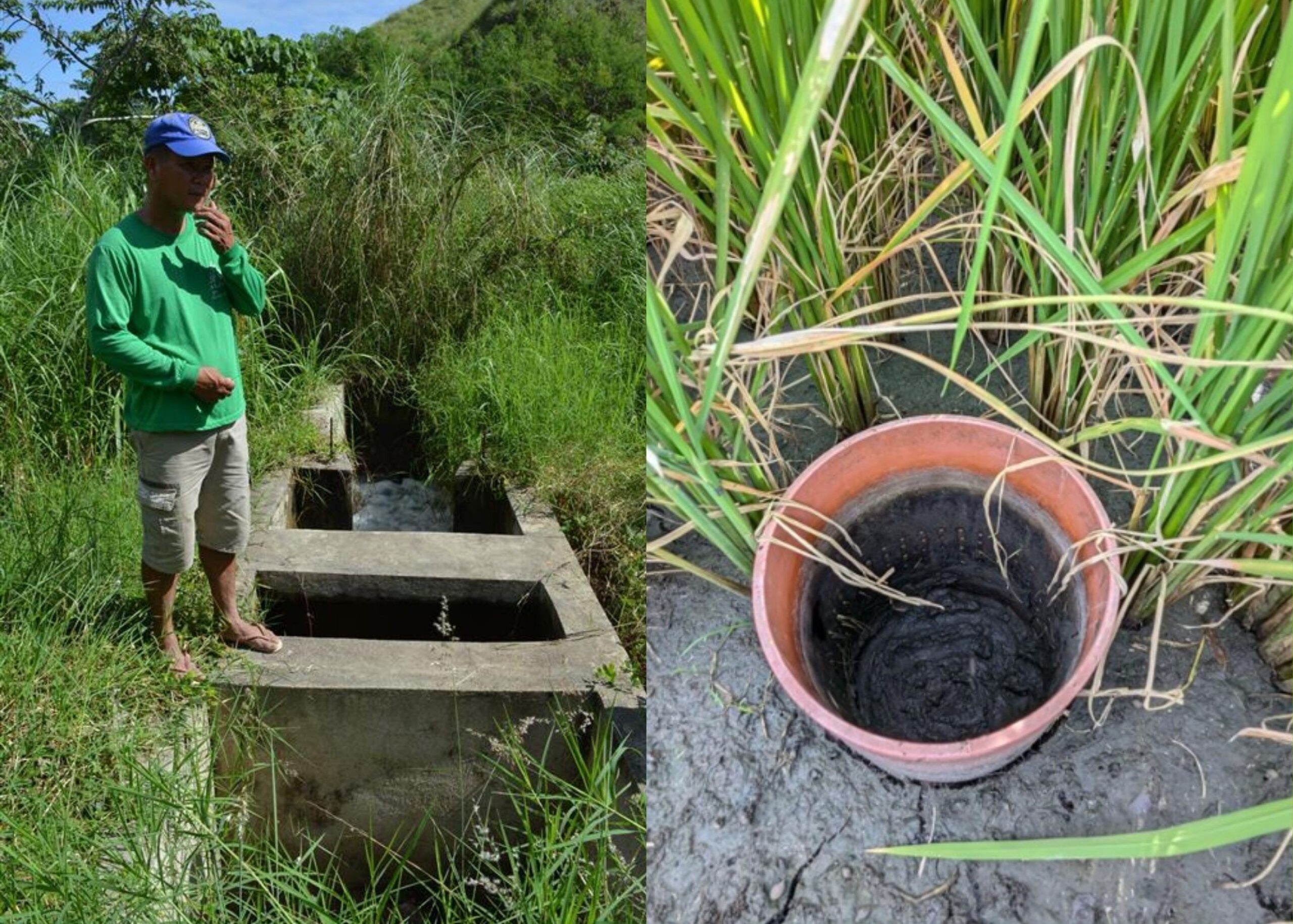
The study used drone maps and soil tests of six groups of nearby fields in Nueva Ecija. It found that differences in land and water conditions lead to some plots benefiting while others struggle in gravity-fed irrigation systems.
In areas where one irrigation water source is shared among hundreds of farmers, elevation gradients and clay content significantly impact water movement. Plots at lower elevations or those with higher clay content at the “tail” end of a canal tend to retain water longer, while upstream “head” plots dry out faster. This makes it nearly impossible for a group of farmers to synchronize their drying periods.
Compounding this is the rigid, top-down nature of water governance in gravity-fed systems. Unlike pump-based systems where farmers have full autonomy over their water use, gravity-fed systems in the Philippines are managed through complex hierarchies. Water release decisions are often made based on predetermined rotational schedules rather than real-time field demand. Farmers have limited influence over these schedules, creating a mismatch between the timing of water delivery and the specific requirements of AWD. Furthermore, the Free Irrigation Service Act of 2018 had inadvertently removed the economic incentive for water savings, providing irrigation water free of charge for landholdings below 8 hectares.
Socio-economic dynamics further complicate the picture. In the study area, 66% of plots are managed by tenants rather than owners. These farmers often lack the autonomy to make long-term management decisions and may be reluctant to adopt AWD due to the perceived risk of crop failure, which could jeopardize their lease agreements. The study noted that AWD adoption was much higher during the wet season because rainfall acts as a safety net, reducing the perceived risk of drying the fields.
Creating contextual solutions for AWD
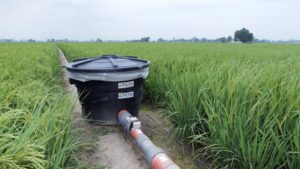
To address these issues and move AWD from small-scale pilots to systemic adoption, the authors argue for a reconfigured governance framework. Key recommendations include adaptive rotational schedules that account for elevation and soil variability; utilizing Internet of Things (IoT)-based sensors and remote sensing to provide real-time data on water levels; and economic incentives such as carbon financing, which can provide farmers with tangible rewards for their water-saving efforts.
Ultimately, scaling AWD requires viewing the irrigation system as a “translation” ecosystem where technology is not just transferred but adapted to local biophysical and social contexts. By addressing the complex interplay of topography, tenancy, and irrigation governance, the Philippines may finally turn the tide on water scarcity in its rice landscapes.
Read the study:
Gio Karlo Evangelista, Kristine Samoy-Pascual, Romeo J. Cabangon, Manuel J. Regalado, Yuji Enriquez, Rubenito Lampayan, Arnel Rala, Sudhir Yadav
Why AWD isn’t taking off: Understanding barriers and pathways for scaling in gravity-fed irrigation systems in rice landscape
Agricultural Systems, Volume 231, 2026
https://doi.org/10.1016/j.agsy.2025.104491