- Rice systems in the Global South are highly water-intensive and already stressed by groundwater overuse, climate change, and rising irrigation demand
- Rapid expansion of AI-driven data centers adds significant industrial water demand in many of these same regions, threatening food and nutrition security
- Without water-aware AI governance and stronger water management, digital infrastructure growth could quietly undermine global rice production and widen food insecurity
By Bushra Humaira Sadaf and Mou Rani Sarker
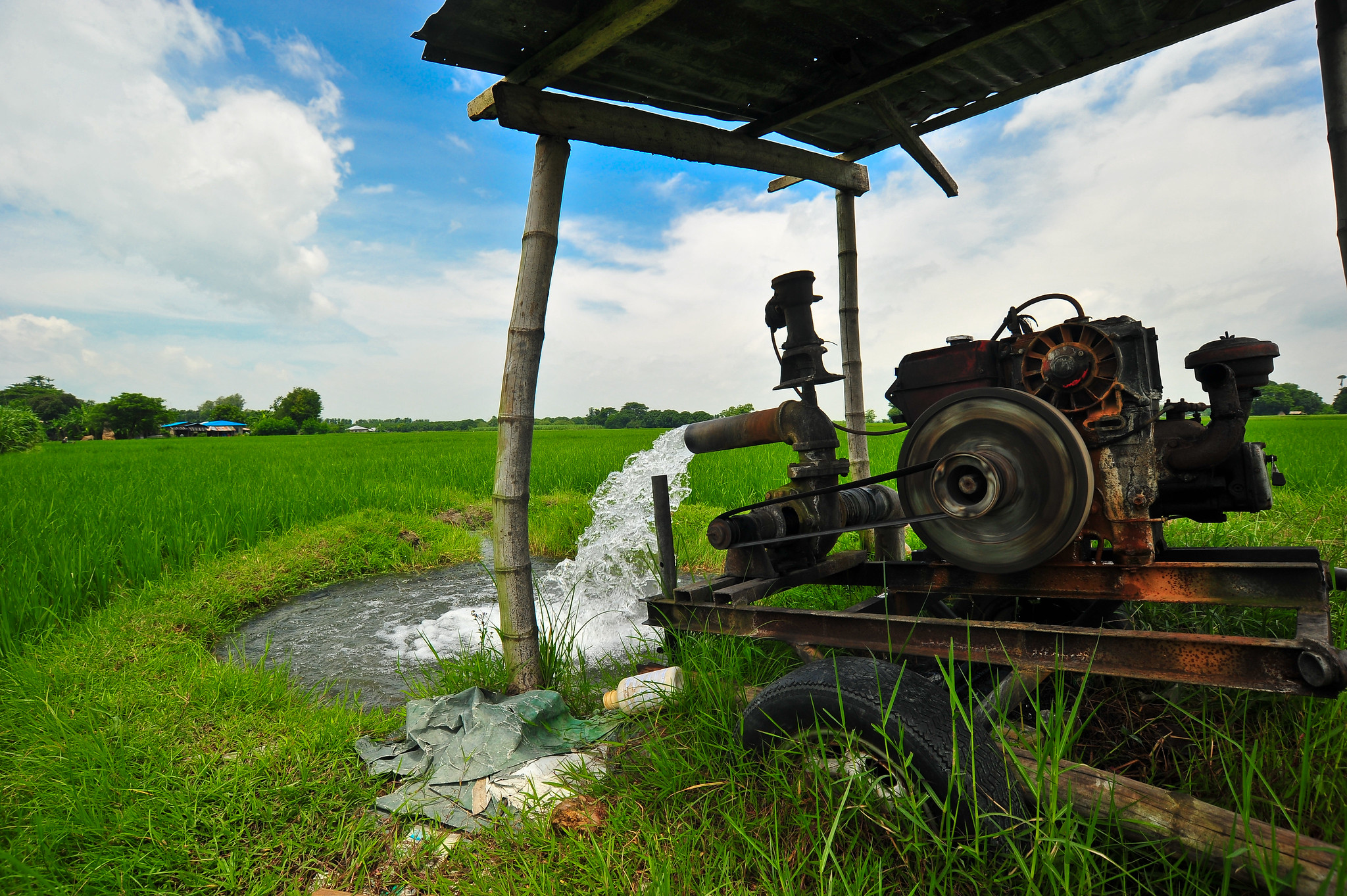
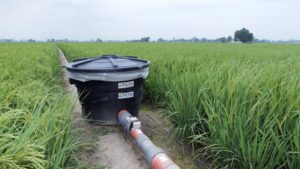
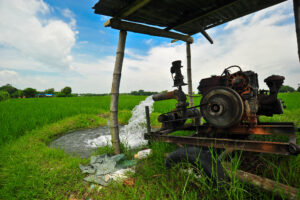
Water scarcity is already affecting agriculture across many parts of the world. In many regions, especially in the Global South, agriculture depends heavily on groundwater that is being used faster than it can be naturally replenished. Globally, agriculture accounts for around 70% of freshwater withdrawals, and in many food-producing areas this extraction is no longer sustainable. As a result, farmers face higher irrigation costs, lower yields, and greater uncertainty.
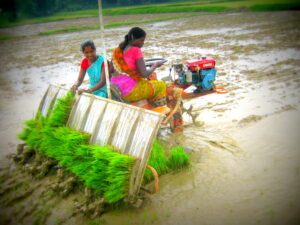
Rice systems are water-intensive and they require timely and reliable water supply. On average, producing 1kg of rice requires approximately 2,500 liters of water. Rising temperatures, erratic rainfall, droughts, and salinity intrusion are increasing crop water requirements while reducing dependable freshwater availability.
By 2030, irrigation demand is projected to rise by 50%. Reduced access to irrigation raises the likelihood of crop failure and weakens household food and nutrition security, with ripple effects across local and global food markets. More than 70% of the world’s food production comes from the Global South, making these pressures globally significant.
In many regions, water withdrawals already exceed natural recharge. The United Nations University Institute for Water, Environment and Health has described this as entering an era of “global water bankruptcy,” where extraction outpaces replenishment and long-term sustainability is at risk.
At the same time, industrial water demand is rising. AI-driven data centers require substantial volumes of freshwater for cooling and energy generation, with large facilities consuming up to five million gallons per day. Many of these centers are expanding in Global South, often in low- and middle-income countries where land and energy are more affordable and regulation may be less strict. Yet many of these countries depend heavily on water-intensive agriculture for employment and food security.
Artificial intelligence also has strong potential to support agriculture. AI tools can improve weather forecasting, irrigation scheduling, pest monitoring, and crop management, helping farmers use water more efficiently and reduce production risks. In rice systems, better data and precision practices can increase yields while conserving scarce resources, strengthening resilience under climate stress.
International Rice Research Institute (IRRI) water scientist Dr. Manoranjan Mondal notes, “Artificial intelligence (AI) is poised to transform multiple sectors, including agriculture. Its expansion should be guided by responsible regulation rather than resistance. The expansion of AI centers may further exacerbate groundwater depletion, potentially threatening agricultural productivity. Reusing treated wastewater from AI cooling systems for irrigation could be a potential strategy to reduce pressure on groundwater resources while safeguarding soil quality and public health.”
In water-stressed basins, reallocating water from irrigation to digital infrastructure can increase yield volatility and production risks in major food-producing and exporting regions. In countries such as India and Bangladesh, where agriculture relies on groundwater and climate-stressed surface water, and where transboundary river issues already complicate management, additional industrial demand risks accelerating groundwater depletion, salinity intrusion, and irrigation shortfalls.
Weak water management in such contexts directly threatens rice-based food systems and rural livelihoods. Reduced production in climate-vulnerable countries like Bangladesh can amplify global price volatility and increase food import dependence, reinforcing existing North–South asymmetries in food and water security.
Because global food systems are interconnected, localized water competition can cascade through supply chains. What begins as basin-level stress can contribute to tighter supplies, higher prices, and heightened food insecurity in net food-importing countries.
The burden is not shared equally. Smallholder farmers, landless farmers, and agricultural laborers bear the costs of reduced irrigation access and rising food prices. As water becomes scarcer, women in farming households often absorb additional unpaid labor, walking longer distances to collect water, adjusting farming and household practices, and coping with food shortages that intensify time poverty and livelihood precarity.
While Fourth Industrial Revolution technologies promise efficiency gains in agriculture, including in Bangladesh, their expanding physical infrastructure depends on water-intensive systems that may undermine the very food systems they aim to strengthen if not carefully governed.
As Kaveh Madani, Director of the UN University’s Institute for Water, Environment and Health, warns, “Millions of farmers are trying to grow more food from shrinking, polluted, or disappearing water sources. Without rapid transitions toward water-smart agriculture, water bankruptcy will spread rapidly.” He further explains, “Water bankruptcy is also global because its consequences travel. Agriculture accounts for the vast majority of freshwater use, and food systems are tightly interconnected through trade and prices. When water scarcity undermines farming in one region, the effects ripple through global markets, political stability, and food security elsewhere. This makes water bankruptcy not a series of isolated local crises, but a shared global risk that demands a new type of response: bankruptcy management, not crisis management.”
Water is a shared and limited resource. Food systems should not subsidize digital growth. Water-blind AI governance is a food security risk. Without explicit regulation that integrates AI infrastructure planning into water–food nexus frameworks, digital expansion may silently erode agricultural resilience and global food stability.
Protecting agriculture in an era of growing water demand requires mindful water use, coordinated policy action, and stronger water governance. Basin-level assessments, transparent allocation, and responsible regulation can help prevent unintended trade-offs. Without careful planning, increasing competition over water may undermine the very food systems that sustain us.