By Glenn Concepcion
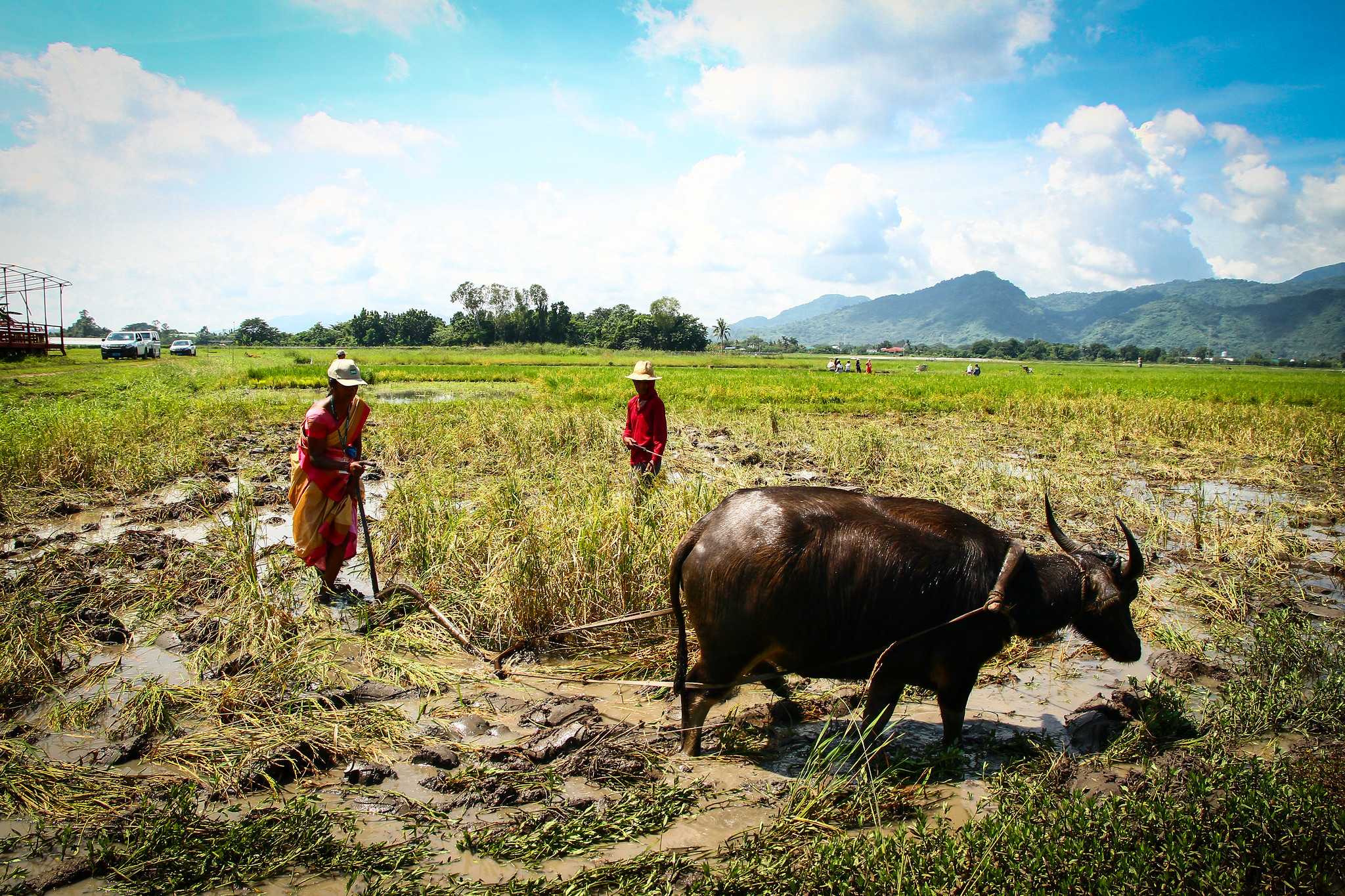
By viewing waste not as a disposal problem but as a valuable nutrient repository, India can move towards more sustainable farming, secure food production, and restore the health of its soils.
As the world observes World Soil Day, a crucial new paper quantifies the immense and often untapped potential of India’s agricultural and animal waste, providing an essential roadmap for the nation to pivot toward sustainable and environmentally friendly farming practices.
The study, titled “Quantifying India’s nitrogen, phosphorus, and potassium generation potential from agricultural and animal waste for sustainable nutrient management” by scientists from the Indian Council of Agricultural Research (ICAR) and International Rice Research Institute (IRRI), highlights that by harnessing its domestic organic resources, India could dramatically reduce its reliance on costly, imported inorganic fertilizers, thereby improving soil health and mitigating environmental concerns.
The scale of India’s organic resources
India, the world’s second-largest food producer and largest livestock rearer, previously lacked comprehensive, state-level quantitative data on organic waste generation. The new analysis addresses this gap, revealing that annually, organic waste generates a massive resource totaling 10.6 MT (million tons) of Nitrogen (N), 2.6 MT of Phosphorus (P), and 10.2 MT of Potassium (K) per year.
This nutrient generation is derived from three main sources:
1. Animal Waste: India generates 667.7 million tons (MT) of animal waste annually, with cattle and buffalo accounting for over 90% of this total. Animal waste contributes to 4.49 MT of N, 1.77 MT of P, and 3.31 MT of K. Critically, animal waste is the primary source of organic phosphorus (69.4% of total P).
2. Crop Residue: About 762.8 MT of crop residue is generated, mainly from rice, wheat, and sugarcane. Crop residue yields 4.55 MT of N, 0.53 MT of P, and 6.61 MT of K. Crop residue plays a dominant role in providing organic K, contributing 65.1% of the total K.
3. Oil Meal: Oil meal contributes an additional 1.51 MT of N, 0.25 MT of P, and 0.24 MT of K.
On average, India has approximately 10.1 tons of organic waste available per hectare (t/ha), which could annually supply 75.6 kg of N, 18.0 kg of P, and 71.7 kg of K. This is equivalent to an average of 164.3 kg NPK/ha, which is comparable to the current national average consumption of 161 kg NPK/ha through inorganic fertilizers.
A state-specific roadmap for transition
The research shows that using organic waste is a natural way to enrich soil. It releases important nutrients for plants gradually, supports soil health, and helps avoid environmental problems linked to highly soluble chemical fertilizers, like water pollution. However, differences between regions make it hard to apply the same policy everywhere.
The study provides an essential roadmap for region-specific agricultural planning based on the nutrient balance between organic supply potential and inorganic fertilizer demand.
States primed for organic farming
The data reveals that several regions, particularly those in the Northeast, already have an organic nutrient surplus, making them ideal candidates for a rapid transition to organic farming policies.
• Among 36 states and union territories, all states except Kerala have a positive K balance.
• States exhibiting an NPK surplus of over 50 kg per hectare (Himachal Pradesh, Uttarakhand, Rajasthan, Jharkhand, West Bengal) show significant potential for expanding organic farming.
• Northeastern states like Sikkim, which successfully transitioned to a fully organic state in 2016, along with Meghalaya (with 175 kg organic NPK/ha available) and Arunachal Pradesh (107 kg organic NPK/ha available), are particularly suitable for large-scale organic certification.
For these positive-balance states, policymakers should prioritize promoting organic farming through streamlined certification, favorable policies, and strategic utilization of government schemes such as Paramparagat Krishi Vikas Yojana (PKVY) or Mission Organic Value Chain Development for North Eastern Region (MOVCD-NER) to subsidize localized waste-to-manure infrastructure.
States needing integrated nutrient management
While the overall national NPK balance appears positive, this is primarily driven by the high availability of Potassium (K). The analysis shows a national average deficit for both Nitrogen (N) and Phosphorous (P) (-26 kg/ha each). This deficit is magnified in intensive farming regions:
• Sixteen states displayed a negative N balance, and 19 showed a negative P balance, indicating a pronounced dependence on inorganic fertilizers for these critical nutrients.
• States known for intensive agriculture, including Punjab, Haryana, Uttar Pradesh, Bihar, Andhra Pradesh, and Telangana, were found to have a high deficit N balance (less than -50 kg/ha).
For these states, which produce significant organic waste but still fall short of meeting the total demand, the authors recommend prioritizing Integrated Nutrient Management (INM) plans instead of promoting full organic agriculture broadly. INM strategically combines organic recycling with necessary inorganic N and P supplements to overcome the negative balances.
Overcoming practical challenges
Despite the robust quantitative potential, significant challenges persist in implementation. Not all generated organic waste is available for agricultural use. For example, oil meals are highly valued in the livestock feed industry, and animal dung is frequently used in rural life for cooking fuel, plastering, or insulation.
Furthermore, collecting and processing this vast resource is hampered by inefficient collection and storage systems. Livestock waste is dispersed across small farms and has high moisture content, making transport costly and leading to nutrient loss, such as N volatilization. Crop residues are bulky, requiring specialized and expensive collection machinery.
The study concludes that efficient collection, storage, processing, and utilization of organic waste are crucial to minimize nutrient loss and maximize agricultural benefits. By successfully implementing policies that promote proper organic waste recycling, India can bridge the gap between its organic potential and its reliance on inorganic chemicals, ensuring a future of sustainable soil health and food security.
Read the study:
Vijayakumar Shanmugam, Virender Kumar, Raman Meenakshi Sundaram, Rapolu Mahender Kumar, Panneerselvam Peramaiyan, Varunseelan Murugaiyan, Amaresh Kumar Nayak (2025)
Quantifying India’s nitrogen, phosphorus, and potassium generation potential from agricultural and animal waste for sustainable nutrient management
Frontiers in Agronomy 7:1689121.
https://doi.org/10.3389/fagro.2025.1689121