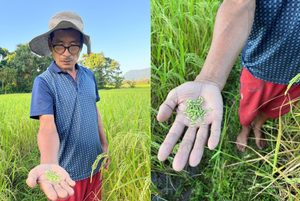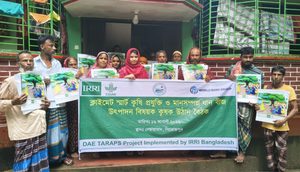
- A 40-year-old Haor woman farmer moved beyond subsistence rice and mustard farming to honey production with support from IRRI’s CS-RVC project.
- The project offered training, bee boxes, extractors, financial literacy, and market links, helping her overcome social norms, floods, and limited opportunities.
- Her success inspires village women, promotes climate-smart diversification, and advances IRRI’s goals for inclusive, resilient agriculture in vulnerable ecosystems.
By Rehana Noor

The International Rice Research Institute (IRRI) is deeply committed to fostering empowerment and inclusivity by ensuring that women, youth, and vulnerable groups are meaningfully included in agricultural development. Through the Climate-Smart Rice Value Chain in the Haor Region (CS‑RVC) project, funded by HSBC Bank Bangladesh, IRRI promotes equitable access to opportunities, training, financial literacy, and technical resources for rice-based farming. This approach aims to enhance livelihoods in the Haor region, one of Bangladesh’s most climate-vulnerable ecosystems.
Amid climate and economic challenges, Sangita Hajong, a 40‑year‑old farmer from Katikona village in Bishwamvarpur Upazila, Sunamganj District, exemplifies transformation and leadership.
From traditional farmer to honey entrepreneur

Sangita, supporting a household of five, has long grown rice and mustard. Despite her efforts, limited income and few livelihood options restricted her family’s economic growth. She sought to increase her earnings and explore new opportunities but lacked the knowledge and resources to do so.
Her turning point came when the CS‑RVC project introduced her to honey production, an income-generating activity suited to the Haor environment, where farming is limited to one season. Honey farming provided a climate-smart way to diversify livelihoods.
Training and tools: Building a new business

Through IRRI, Sangita received a comprehensive support package:
- Training in honeybee management and honey extraction
- Guidance on marketing and product selling
- Honeybee boxes with four compartments
- A honey extractor and essential protective tools
- Financial literacy training to strengthen her business confidence
- Direct connections to local honey buyers, ensuring market access
This support enabled her to transition from a subsistence farmer to an emerging agripreneur.
Impressive growth, increasing confidence

In her first honey season, Sangita harvested three times, totaling 37kg., and earned a profit of BDT 13,500, significantly contributing to her household income. This success improved her financial security and confidence, demonstrating that with the right support, rural women can excel in new ventures.
“IRRI gave me the training, tools, and courage to start something completely new,” Sangita shared. “Now I earn from honey, and other women in my village are also inspired to try.”
Encouraged by her achievements, Sangita plans to expand into value-added products such as beeswax candles, skin care items, and bee pollen, reflecting her growing ambition.
Overcoming barriers

Like many women in the agricultural sector, Sangita faced significant challenges:
- Restrictive social norms that limit women’s economic roles
- Limited recognition of women’s capacities in entrepreneurship
- Resource constraints and dependence on male‑dominated value chains
- Restricted market access in remote Haor communities
- Environmental pressures, including flash floods that threaten livelihoods
With IRRI’s support, training, and market connections, she overcame these barriers and established herself as a successful honey producer. Her success has made her a role model in her village. Inspired by her journey, several women have expressed interest in learning honey production, highlighting her influence as a community change-maker.
A vision for continued growth

To scale her business further, Sangita hopes for:
- Better access to formal markets
- Product certification to build trust and expand sales
- Digital literacy training
- Branding and packaging support to enhance product appeal
These opportunities could position her as a leading female entrepreneur in the Haor region’s expanding honey value chain.
Sangita’s journey reflects IRRI’s mission to promote inclusive, climate‑smart agriculture that uplifts marginalized communities in one of Bangladesh’s most fragile ecosystems. The CS‑RVC project has improved livelihoods and strengthened resilience in the Haor region, where flash floods often threaten food security and income stability.
By investing in women like Sangita, the project demonstrates how targeted support can unlock potential, inspire communities, and build a more prosperous, equitable, and climate‑resilient rice-based food system.
Rehana Noor is the Assistant Manager at the International Rice Research Institute (IRRI), Bangladesh and coordinates the “Climate-Smart Rice Value Chain” project in the Haor region. Her expertise includes sustainable farming, gender-inclusive seed systems, digital agriculture, and climate-resilient value chains.