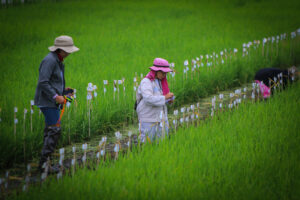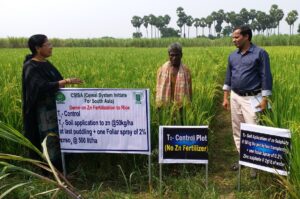
- A CGIAR market intelligence brief found that Ethiopia’s rice sector is entirely direct-seeded, challenging previous assumptions and calling for breeding strategies better matched to farmers’ fields.
- Ethiopia remains heavily dependent on rice imports despite expanding production, while inconsistent area estimates highlight the need for more accurate mapping and remote-sensing data.
- Demand-driven breeding should prioritize traits farmers and consumers value, including early vigor, weed competitiveness, preferred grain quality, aroma, zinc content, and affordable inbred seed.
By Glenn Concepcion
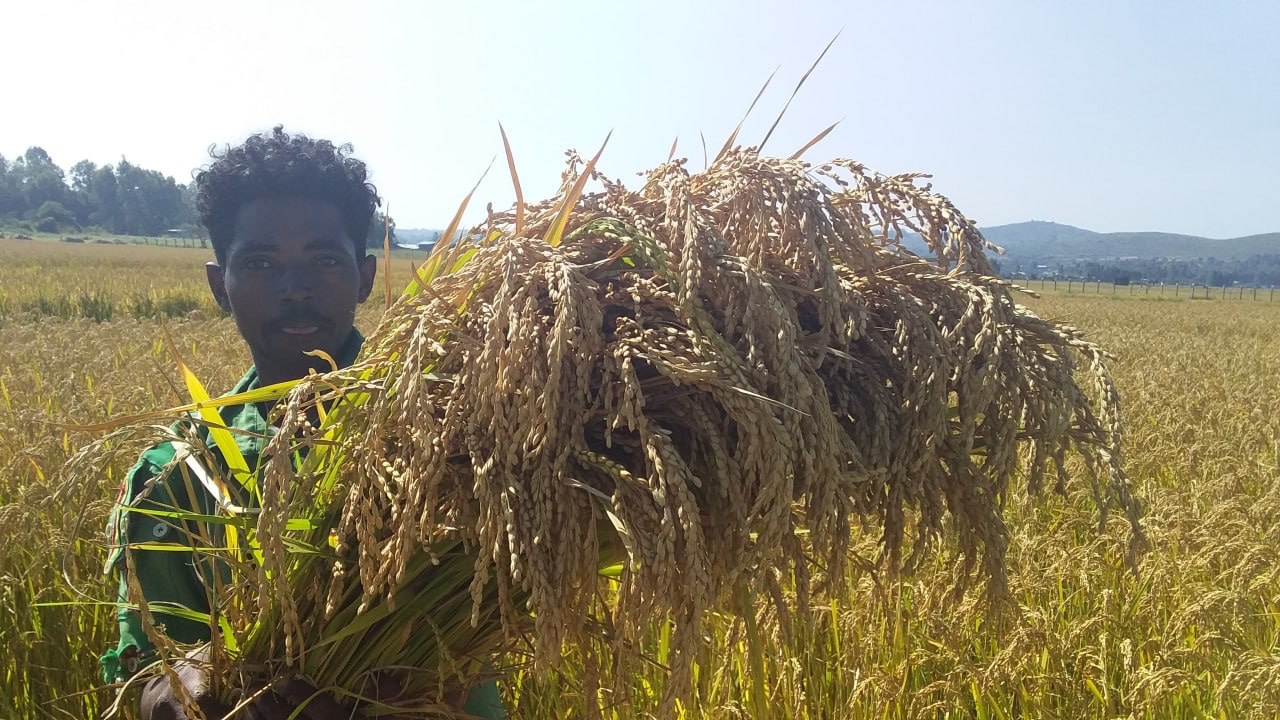
In Ethiopia, Africa’s second most populous nation, agricultural transformation is no longer a luxury but an urgent necessity. With over 80% of the population living in rural areas and more than 70% dependent on farming (ILO 2023), the country is facing a compounding food security crisis: 20.1 million people are currently food-insecure, and about 7.4 million children suffer from malnutrition (WFP 2024).
Seeking a resilient solution, the Ethiopian government has designated rice as a “millennium crop” due to its high productivity and remarkable ability to adapt to diverse agroecosystems. And yet, despite massive expansions in cultivated area, domestic production remains severely bottlenecked. Ethiopia’s rice self-sufficiency rate is currently below 20%, forcing the government to import over 533,000 tons of rice annually, a burden that cost the country upwards of USD 215.30 million in recent years.
To bridge this gap, a CGIAR Market Intelligence Brief authored by scientists from the International Rice Research Institute (IRRI) and the Ethiopian Institute of Agricultural Research (EIAR) recently mapped out the country’s actual rice ecosystems. Led by Dr. Melanie Connor and Arelene Julia Malabayabas of IRRI, alongside lead EIAR researcher Dr. Mulugeta Atnaf, gender and social inclusion scientist Dr. Abiyot Anbacha, and agricultural economist Melkamu Bazie, the brief reveals an important, previously overlooked detail: Ethiopia is a 100% direct-seeded rice system, and this insight highlights the need to ensure breeding priorities are aligned with farmers’ needs and production practices.
Transplanted vs. direct seeded
The foundation of any successful breeding program includes an accurate understanding of how a crop is planted. For years, global databases like the Global Market Intelligence Platform (GloMIP) have categorized a massive portion of the Ethiopian market, specifically the Rice Indica EAF MS00291 segment, as a transplanted system. In these systems, seedlings are raised in nurseries before being moved to flooded paddies.
The new IRRI-EIAR study has exposed this as an incorrect assumption. In reality, Ethiopia is a 100% dry direct-seeded rice system, where farmers broadcast seeds directly into the soil. The strategic implications of this are profound, as breeding priorities developed for transplanted systems may overlook traits important to direct-seeded rice.
Direct seeding necessitates traits such as early vigor and superior weed suppression, as young rice plants must compete with aggressive weeds from day one without the head start of a nursery. Beyond productivity, this also carries an environmental aspect, as direct-seeded rice is a critical tool for climate mitigation, associated with significantly lower greenhouse gas emissions than traditional flooded transplanting. Recognizing this distinction allows Ethiopia to align its breeding targets with both farmer behavior and global climate goals.
Mapping the landscape
Actual mapping of the terrain also reveals a diverse landscape where statistics often clash. The study identifies approximately 178,000 hectares of rice grown across nine regions, yet this figure exists within conflicting estimates from different sources. While the Food and Agriculture Organization (FAO) suggests a mere 60,000 hectares and the Ethiopian Statistical Service (CSA/ESS) reports roughly 91,000 hectares, government administrative data claims a massive 1.5 million hectares.
This statistical disparity underscores an urgent need for remote sensing to provide a more grounded and accurate statistical blueprint. Currently, the landscape is divided into two primary elevations that can dictate agricultural success:
- Upland Ecosystem: 70% (124,000 ha), dominant across nearly all regions.
- Rainfed Lowland: 28% (50,000 ha), concentrated in the Amhara region.
- Elevation Split: Roughly 53% low-elevation and 47% high-elevation.
This elevation split is not merely geographical; it also has biological implications. Altitude determines temperature, which in turn dictates maturity preferences. Early-maturing varieties are preferred in rainfed lowland systems, while medium-maturing varieties are more common in rainfed cool-elevated (80%) and upland (85%) ecosystems.
Farmer and consumer preferences
Mapping the terrain may reveal where the rice grows, but the success of any new variety depends on the stark economic logic experienced by the people farming the land. For example, stakeholders expressed a staunch preference for inbred varieties over hybrids. For resource-poor smallholders, this is a matter of survival, as inbred varieties allow for seed-saving, drastically reducing annual input costs for farmers who lack access to advanced technology and credit.
Consumer preferences also further complicate the breeding mandate. To compete with high-quality imports, the study recommends a tailored approach to grain quality. For rainfed high-elevation ecosystems, breeding programs should focus on soft, medium-grain varieties. Conversely, for low-elevation upland systems, the market prefers long, slender, and firm-cooking grains.
The study also highlighted the importance of aroma as a breeding priority. To compete with the high-quality aromatic rice that currently dominates imports, local varieties must also prioritize aroma. Without this, local rice will remain a secondary choice for urban consumers. And in a nation where zinc deficiency is a significant concern for pregnant women and children, the study also recommends moving zinc biofortification from a “nice-to-have” to an “essential” breeding target.
Critically, the brief notes that current Target Product Profiles (TPPs) are overloaded. With 14 “essential” traits currently listed for improvement, the research burden can become unfeasible for breeders. A demand-driven prioritization is suggested to trim these profiles into focused, achievable breeding goals that address the most high-impact stressors first.
A refreshed roadmap for Ethiopian rice
The findings from this market intelligence effort can provide the key scaffolding for the country’s National Rice Development Strategy (NRDS II). By orienting breeding priorities to farmer needs and market demands, Ethiopia can align its research with the reality found in its fields.
Ultimately, transforming Ethiopia from a rice importer to a self-sufficient producer will require more than just improved seeds. It demands an integrated approach to soil-crop management, the adoption of remote-sensing monitoring, and a commitment to varieties that respect the economic, nutritional, and environmental realities of the Ethiopian smallholder and consumer.
READ THE FULL BRIEF:
Melanie Connor, Mulugeta Atnaf, Arelene Malabayabas, Abiyot Anbacha, Melkamu Bazie
Rice seed market segments for Ethiopia
Market Intelligence Brief Series 33, Montpellier: CGIAR.
https://hdl.handle.net/10568/178830