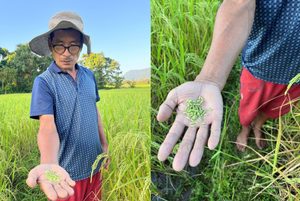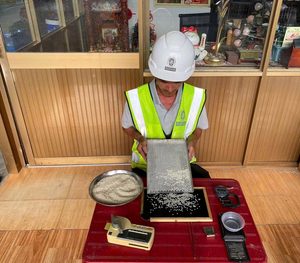
Even rice that meets agreed physical specifications may not deliver the eating quality buyers expect. Drawing on practical experience from a Vietnamese rice processing mill, our contributing authors explain how cooking performance can guide rice sourcing, and how matching rice to a specific culinary use can reduce costly mismatches and build clearer expectations across the rice supply chain.
By Nguyen Dinh Phong and Nguyen Van Hieu
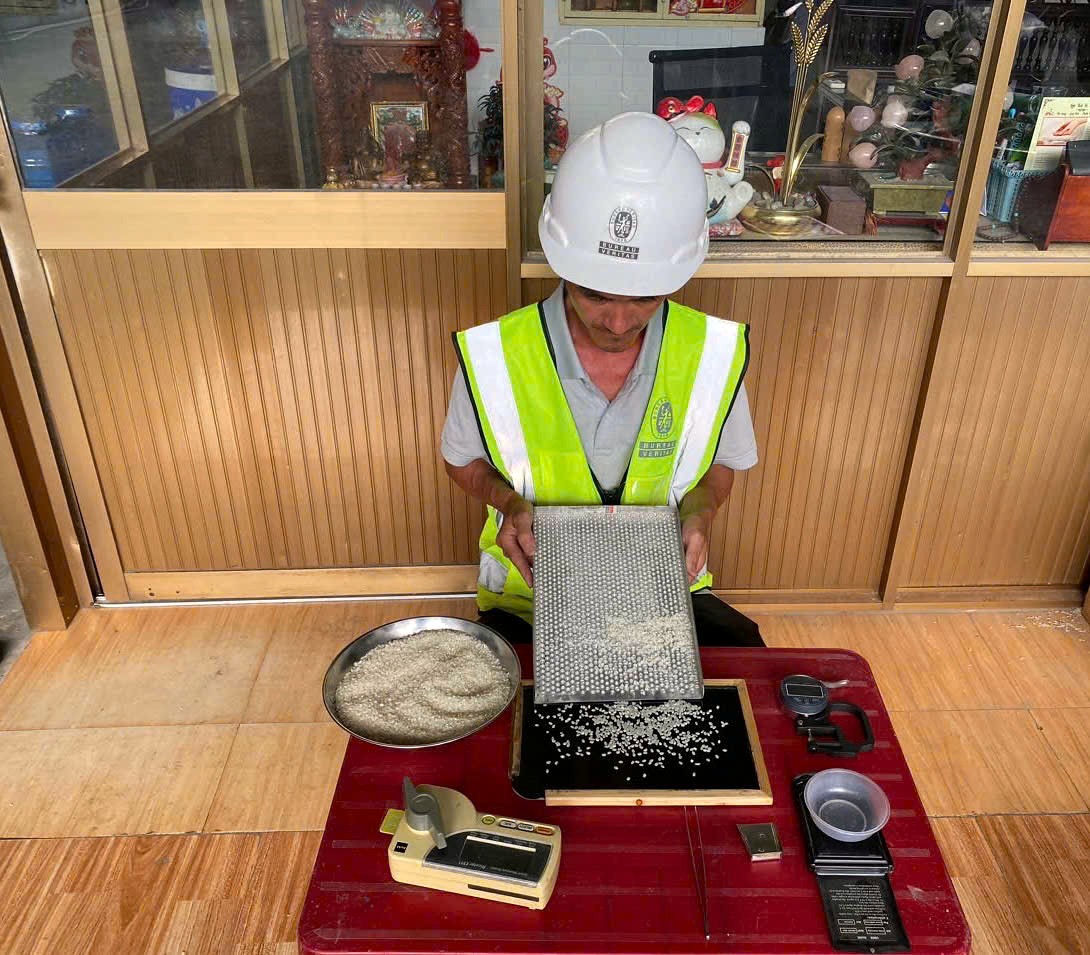
A rice shipment can meet its agreed grain specifications and still disappoint the people who cook it. Length, moisture and the proportion of broken kernels can be checked before dispatching. Whether the cooked rice stays firm, clumps together, or remains pleasant after cooling is harder to predict from those figures alone. For rice buyers, processors and foodservice operators, the most useful question may not be simply which rice to buy, but what the rice must do in a particular kitchen.
At a processing mill in Vietnam’s Mekong Delta, this distinction is part of everyday sample evaluation. A buyer seeking rice for fried dishes may need grains that separate easily; another preparing a cohesive dish may welcome a softer, stickier texture. Neither preference defines quality for every market. This article draws on production practice and an anonymized commercial case, not on a controlled scientific trial.
A specification is not a cooked meal
Scientific research helps explain why cooked textures differ. The International Rice Research Institute (IRRI) identifies apparent amylose content as an important indicator of firmness, stickiness, and the tendency of cooked rice to harden during cooling. Texture is also shaped by the structure of amylopectin, the other major starch component in rice, which influences starch gelatinization and the texture of cooked grains [1]. Yet rice quality is not just affected by these factors. A review by Custodio and colleagues describes how consumers, traders and researchers can value different combinations of grain appearance, texture, aroma and other characteristics [2].
A physical specification remains essential. The proportion of broken kernels, moisture content, and the presence of discolored or damaged grains are important to both contract compliance and processing decisions. But those measures do not fully answer whether cooked rice will suit a household meal, a fried-rice kitchen, or a dessert preparation. Grain shape, too, is only a starting clue: samples need to be cooked to understand the eating experience they offer.
Begin with the dish and its texture
Instead of looking for one rice that suits every purpose, buyers should define the eating experience they need. Some applications call for fragrant rice with a relatively firm bite and grains that separate easily. Others require a softer, more cohesive texture. Short-grain types may be selected when the cooked grains need to hold together during shaping or mixing. Whole-grain and pigmented rice, which retain more of the bran layer, may need different cooking and resting conditions from polished white rice.
Even within one broad category, the recommended water ratio should be treated as a trial setting, not an unchanging recipe. Milling degree, crop season, storage, cooker size, and heating behavior all influence the outcome. A supplier can offer a starting ratio, but the buyer should confirm it in the equipment and serving conditions used by the intended customer. This type of trial aims to identify the cooking conditions that produce the most suitable result for a particular rice and application. This differs from a comparative cooking test, in which samples are prepared under the same measured conditions so that differences in their cooked performance can be assessed fairly.
Whole-grain rice also raises questions beyond cooking. Its bran layer contains natural oils that can deteriorate in storage. Research on brown-rice stabilization documents how treatment and storage conditions affect shelf life [3]. It would therefore be misleading to apply one cooking time or one shelf-life claim to every brown, red, or black rice product without checking its processing, packaging, and storage conditions.
What a routine cooking check looks like
At the Mekong Delta mill where we work, quality-control staff typically cook small samples in electric rice cookers. A batch usually contains about 100–250 grams of rice, depending on the cooker and the number of people taking part in evaluation. Polished white rice is normally rinsed twice and cooked without soaking; glutinous rice is handled differently. Rice and water are measured by volume with the same cup. Starting ratios vary according to the sample rather than being treated as a universal specification.
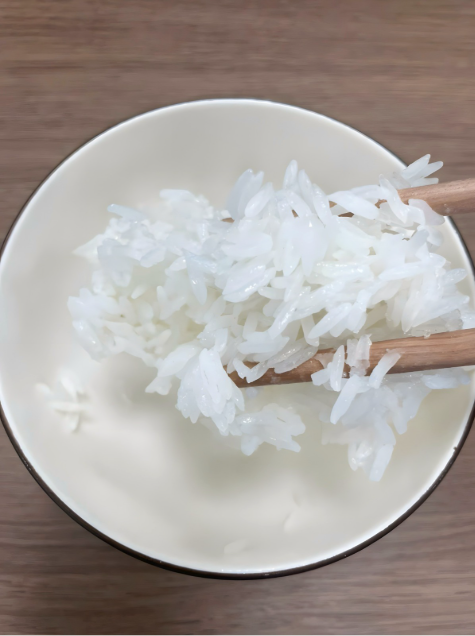
When cooking finishes, the rice is fluffed and rested for around 10–15 minutes. Evaluators consider aroma and possible off-odors, as well as softness, firmness, stickiness, separation of the grains, and the general eating quality. A sample that smells sour or musty, tastes abnormal or contains hard, undercooked grains requires further attention. The assessment is practical and sensory; it is not presented as a replacement for accredited laboratory tests.
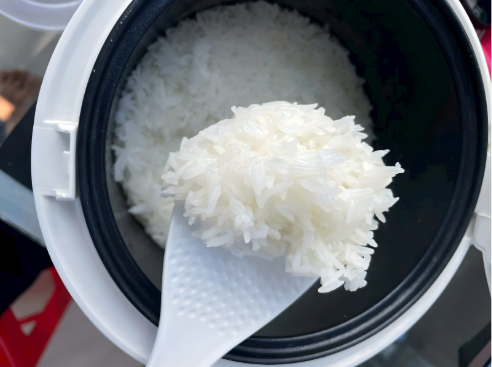
A portion is then placed in a bowl at room temperature and checked again after roughly 20–30 minutes. That second observation matters because a texture that seems acceptable immediately after cooking may change as the rice cools. When an approved reference sample is available, the current sample can be cooked in the following batch and compared with it. The batches are usually prepared successively rather than simultaneously, so recording the cooking conditions helps make the comparison more meaningful. To reduce the effect of cooling on texture, each sample should also be assessed at comparable intervals after cooking and held under consistent conditions before evaluation.
Sampling and frequency also matter. When rice is held in silos, staff draw samples from the material intended for the shipment; when it has already been bagged, they take samples from the relevant packed stock. Cooking checks can be scheduled by elapsed time or production volume. In practice, the interval varies with the lot rather than following a single rule for all orders. Records and retained samples support later review if a buyer queries the delivered product.
A buyer case: balancing cooking quality and cost
One restaurant-supply buyer in North America wanted rice for fried-rice dishes and initially requested a premium specification with no more than 5% broken kernels. The first samples performed well in the buyer’s kitchen, but the price exceeded the target for the intended business. Rather than immediately changing to a different rice type, the supplier and buyer considered whether a different broken-kernel percentage could meet the same cooking needs at a workable cost.
The buyer received one-kilogram samples at 15% and 25% broken kernels and cooked them in the intended dishes. After evaluation, the buyer found the 25% option acceptable and selected it for an order. This result belongs to that particular rice, kitchen, and application: more broken kernels can affect handling and the finished dish, so it would be wrong to assume that raising the percentage always leaves eating quality unchanged.
The useful lesson is the process. The original cooking expectation remained the reference point; a single commercial parameter was changed; and the revised sample was tested before the specification was agreed. In other circumstances, a buyer may need to change the rice type or the cooking method instead. There is no substitute for evaluating the product under the conditions in which it will actually be eaten.
Follow the sample through to delivery
Sample approval should link to the commercial lot. Buyers can ask where a reference sample was drawn, how the supplier identifies the stock to be packed, what quality limits are in the contract, and what evidence is available if the shipment appears different. Moisture limits, broken-kernel percentages, and any required residue tests should be agreed for the actual destination and product rather than inferred from a generic brochure. Testing for a regulated limit should be reported as passed only when an applicable result is available.
A retained sample can support investigation, but it is not by itself proof that a shipment met every contractual requirement. The sampling method, storage of the reference, agreed inspection criteria, and any independent assessment remain relevant. At the mill described here, retained samples may be kept for up to three months for comparison; the practice should not be assumed to apply unchanged across the industry.
Questions to bring back to the kitchen
Before approving a new rice supply, buyers can ask four straightforward questions: 1) How was the sample cooked, including water measurement and resting time? 2) Does the cooked texture match the intended dish after cooling? 3) Was the reference sample drawn from the stock to be shipped? 4) If the specification changes, has the revised sample been tested again?
Choosing rice well is not a contest to identify one superior variety. It is a process of connecting measurable grain quality with the people, equipment, and dishes at the destination. A well-documented cooking trial can turn an abstract product specification into a clearer shared expectation—and reduce avoidable disagreements later in the supply chain.
References:
[1] IRRI Service Laboratories. Apparent amylose content. https://isl.irri.org/services/rice-plant-grain-and-soil-physico-chemical-analyses/aac
[2] Custodio MC, Cuevas RP, Ynion J, Laborte AG, Velasco ML, Demont M. 2019. Rice quality: How is it defined by consumers, industry, food scientists, and geneticists? Trends in Food Science & Technology 92:122–137. https://doi.org/10.1016/j.tifs.2019.07.039
[3] Bergonio KB, Lucatin LGG, Corpuz GA, Ramos NC, Duldulao JBA. 2016. Improved shelf life of brown rice by heat and microwave treatment. Journal of Microbiology, Biotechnology and Food Sciences 5(4):378–385. https://doi.org/10.15414/jmbfs.2016.5.4.378-385
About the authors
Nguyen Dinh Phong and Nguyen Van Hieu work in rice processing and export supply at Vu Phong Phu Rice Polishing Company Limited, Cai Be, Dong Thap, Vietnam. The practices described are observations from their workplace rather than a controlled research study.
Correspondence: John@vuphongphu.com; brian@vuphongphu.com.