By Ankita Paul and Anthony Fulford*
Flooded rice systems are an important source of methane (CH4), with irrigated rice in India estimated to emit approximately 3.97 teragrams of CH4 annually. Reducing CH4 emissions from rice cultivation is therefore an important component of climate-smart agriculture and India’s long-term climate goals.
Alternate Wetting and Drying (AWD) is an established water management practice that can reduce irrigation requirements and CH4 emissions by allowing rice fields to periodically dry rather than remain continuously flooded. However, the feasibility and effectiveness of AWD largely depends on local topography, drainage conditions, rainfall patterns, and farmers’ ability to control field water levels. In low-lying rice-growing areas, particularly those experiencing heavy rainfall and prolonged waterlogging, achieving the wetting-drying cycles required for AWD can be difficult, if not practically impossible.
Improving drainage or modifying field conditions to enable controlled drying may require additional infrastructure, labour, and investment, thereby making such interventions difficult to implement at scale. This creates a need for an economically feasible mitigation approach that can reduce CH4 emissions without requiring changes to field drainage or the maintenance of drying periods.
A collaborative approach to climate-smart rice cultivation
Recognizing the need for context-specific climate solutions, the International Rice Research Institute (IRRI), under the Carbon Offsetting Rice Emissions (CORE) Project, funded by the German Federal Ministry for Economic Cooperation and Development (BMZ) and implemented through a consortium coordinated by Deutsche Gesellschaft für Internationale Zusammenarbeit (GIZ), collaborated with Professional Assistance for Development Action (PRADAN) in 2025 to demonstrate climate-smart rice management in farmer fields in Dindori district of Madhya Pradesh, India. The work focused on AWD as a climate-smart irrigation management practice while also exploring biological solutions for CH4 emissions through a collaboration with the Indian Council of Agricultural Research-Central Rice Research Institute (ICAR-CRRI), Cuttack in Odisha.
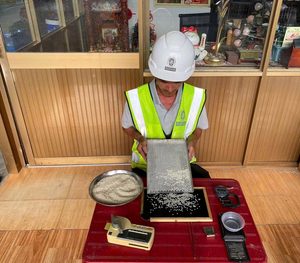
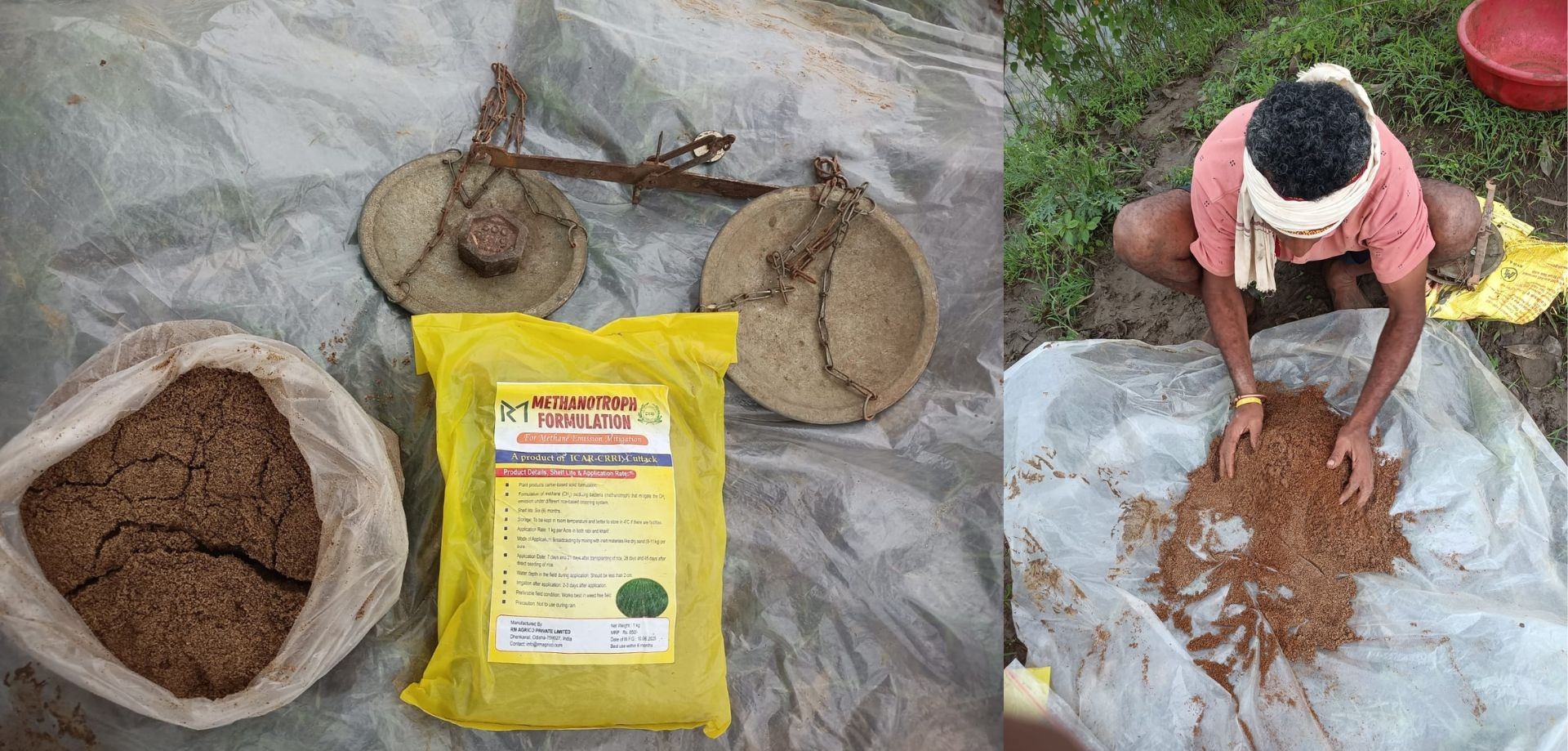
ICAR-CRRI has developed a tamarind-acacia methanotrophs product (MT-22, RM Agrico Pvt. Ltd., Dhenkanal, Odisha) for use in rice systems (Photo 1). Methanotrophs are methane-oxidizing bacteria that consume CH4 produced in flooded soils, providing a biological pathway for reducing the amount of CH4 released to the atmosphere. The CRRI product is a solid formulation that can be directly applied to the soil surface for both transplanted and direct-seeded rice.
The collaboration in Madhya Pradesh therefore provided an opportunity to evaluate this biological approach under farmers’ field conditions, where rice remains flooded and AWD is difficult to maintain. Conducting the experiment in farmers’ fields was therefore important to understand the efficacy of methanotrophs in reducing CH4 emissions while maintaining rice productivity under flooded conditions.
Experiences from Madhya Pradesh: Expanding options for low-emission rice in India and beyond
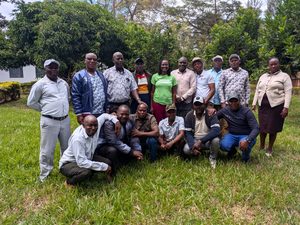
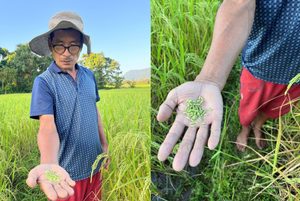
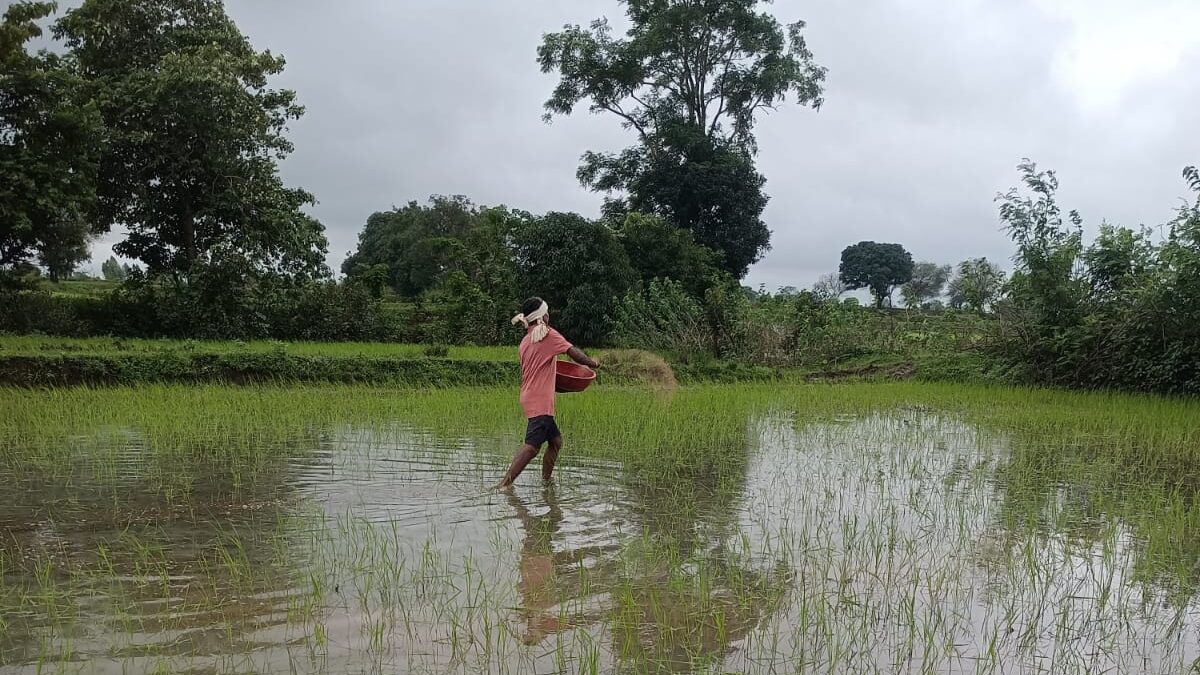
Field demonstrations in Dindori, Madhya Pradesh showed encouraging results for biological approaches to CH4 mitigation under flooded, transplanted rice. The kharif 2025 season recorded high rainfall, making it difficult to maintain the drying periods required for optimal adaptation of AWD (Photo 2). Consequently, AWD reduced CH4 emissions by only 16% compared with conventional continuously flooded irrigation. Whereas methanotroph application under continuous flooding performed particularly well, reducing CH4 emissions by approximately 40%. These results highlight the potential of methanotrophs as an alternative option for reducing CH4 in rice systems where prolonged flooding makes AWD difficult, if not impossible, to implement (Photo 3).
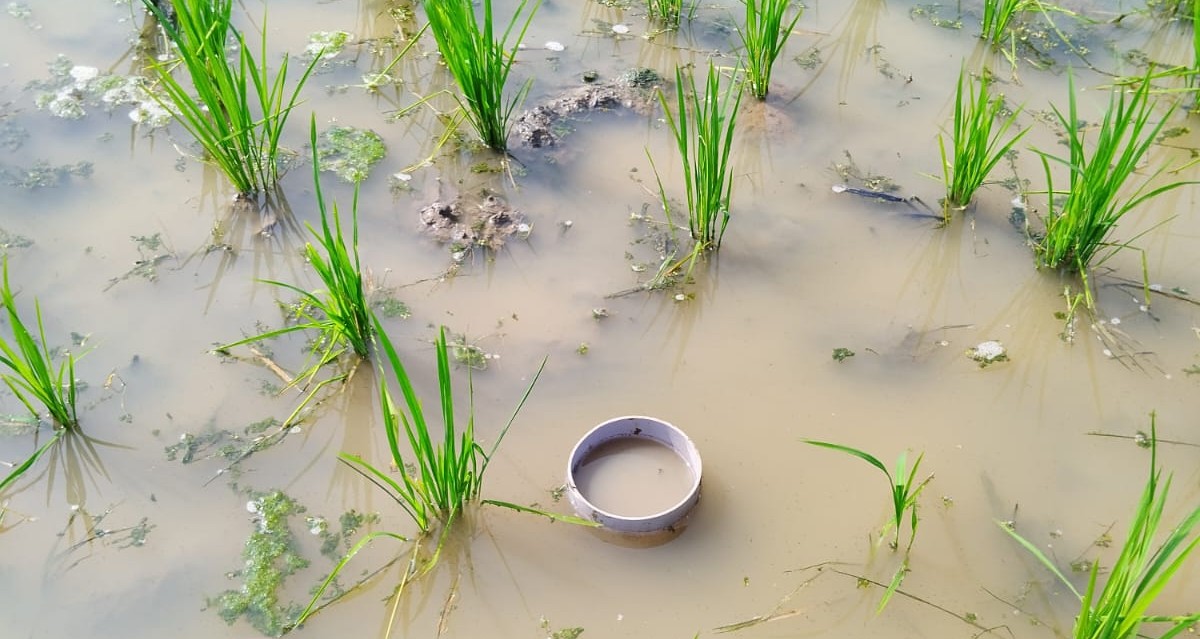
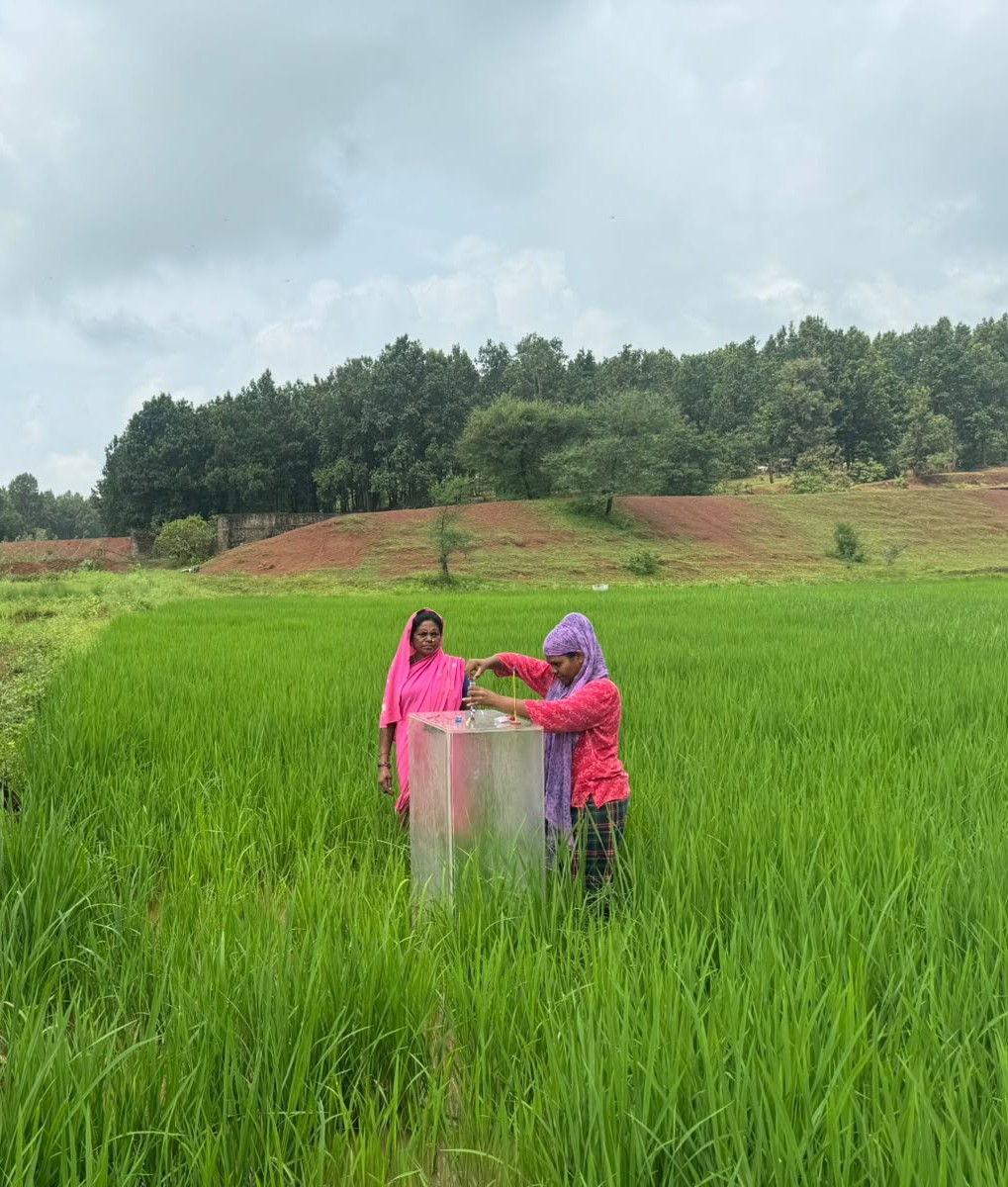
It was also encouraging to note that the reduction in CH4 was achieved without compromising rice productivity. Methanotrophs application under continuous flooding increased yield by approximately 3% compared to conventional continuous flooding, suggesting that CH4 emission can be reduced while maintaining or even improving rice productivity in flooded conditions. Overall, these results stress the importance of adapting climate-smart rice solutions to local conditions. While AWD remains an important option for reducing irrigation requirements and CH4 emissions where water levels can be managed, methanotrophs present a new pathway for CH4 mitigation when fields remain flooded. This adaptive research clearly demonstrates the potential of biological approaches to support productive, lower-emission rice systems. Continued collaboration among researchers, implementing partners and farmers will be important to optimize climate-smart management strategies across such diverse rice-growing environments.
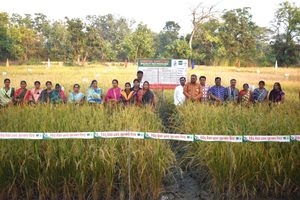
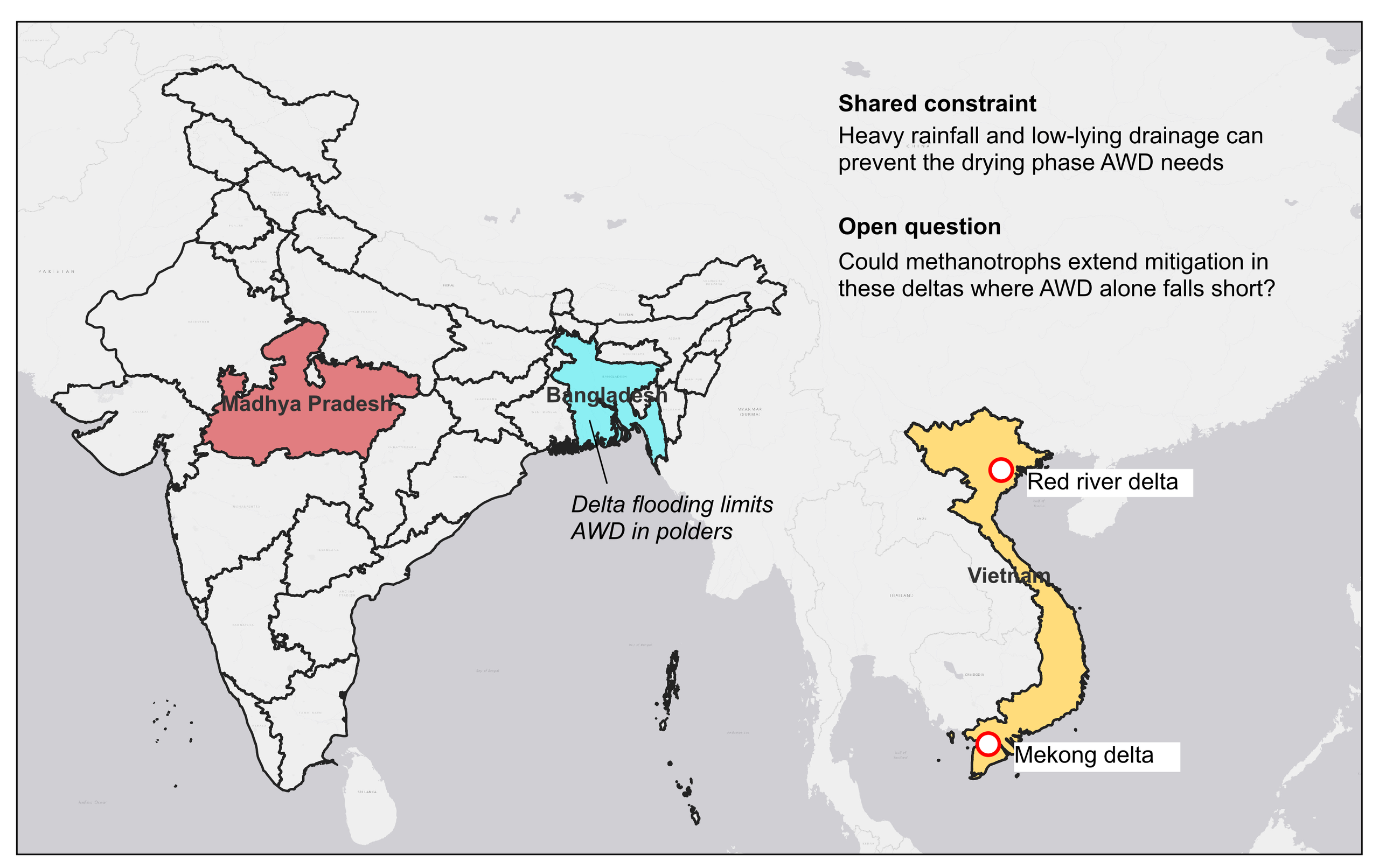
The potential relevance of these findings resonates beyond Madhya Pradesh, India. Across South and Southeast Asia, rice-growing environments vary widely in their ability to support controlled water management. Low-lying and flood-prone rice landscapes, especially polders in Bangladesh and the Mekong and Red River Deltas of Vietnam, for example, can experience rainfall and drainage conditions that constrain the drying phases required for AWD (Figure 1). Previous IRRI and CGIAR research has demonstrated the importance of first and foremost assessing AWD suitability according to local conditions, while field studies in Vietnam have also documented situations where rainfall and low-lying conditions prevent critical drainage phases. The encouraging results from India therefore raise an important question for future climate action: could methanotroph-based soil, seed, or seedling amendments be used to lower CH4 emissions in rice environments when climate-smart water management fails? Further validation across contrasting rice ecologies could help determine where this biological approach can expand the portfolio of low-emission rice technologies.
Acknowledgements:
This work was undertaken under the Carbon Offsetting Rice Emissions (CORE) Project, funded by the German Federal Ministry for Economic Cooperation and Development (BMZ). CORE is implemented through a consortium coordinated by GIZ, with IRRI contributing scientific expertise on climate-smart rice production. Field implementation and farmer engagement in Madhya Pradesh were carried out in collaboration with PRADAN. The methanotroph-based mitigation component was undertaken in collaboration with the ICAR-Central Rice Research Institute (ICAR-CRRI), Cuttack, which developed the methanotroph formulation evaluated in the field. IRRI gratefully acknowledges the contributions of PRADAN, ICAR-CRRI, participating farmers and all project partners whose collaboration supported these field demonstrations.
*Contact Information: a.fulford@cgiar.org