Rice farmer Somi Lasuh replaced transplanting with direct seeding, a labour-saving practice that cuts costs, relies mainly on family labour, and maintains similar returns, offering a practical option for smallholders despite some risks.
By Dr. Virosanuo Solo (Corresponding Author), Prof. T. Gohain, and Dr. Rokozeno
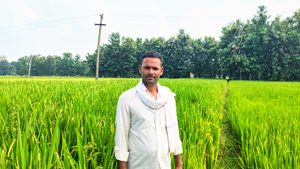
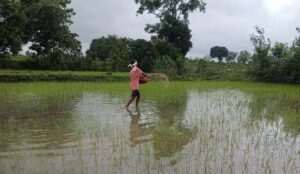
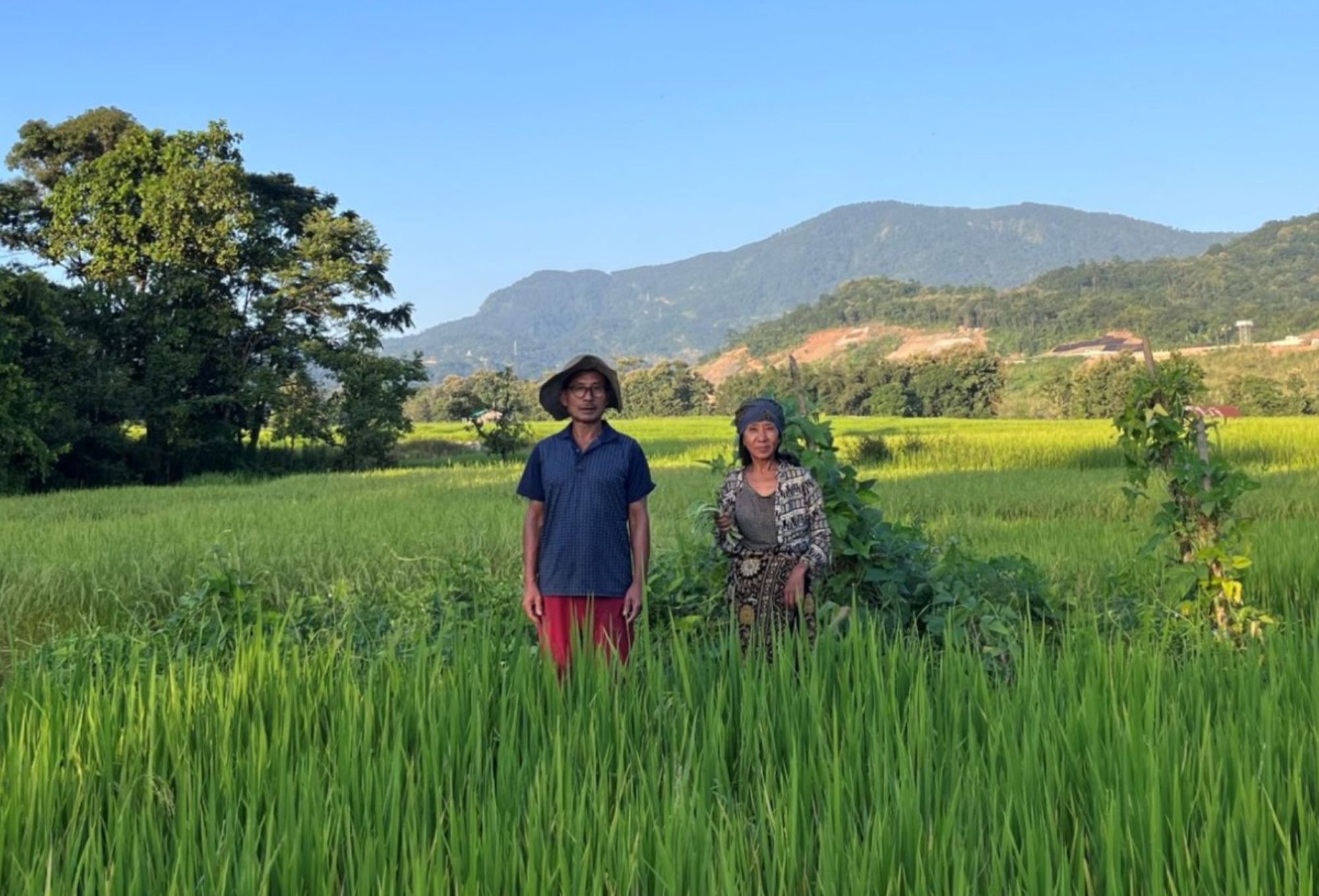
In Peduzha village in Medziphema, Nagaland, rice farmer Somi Lasuh no longer waits for hired transplanting crews to arrive. Instead, he broadcasts pre-germinated paddy seeds directly onto a carefully prepared field. This simple change has reduced labour needs, lowered cultivation costs, and kept rice farming manageable for his family.
“Broadcasting saves almost ₹3,000–4,000 (~ 30-40 USD) per crop,” says Lasuh. “We can do most of the work ourselves, and the returns are almost the same as transplanting.”
A practical response to labour scarcity
Across parts of Nagaland, India, rising wages and a shortage of workers during the transplanting season are making conventional paddy transplanting increasingly difficult. In Medziphema, daily wages are about ₹600–650 for men and ₹500–550 for women (around 5-6 USD), often with additional costs for meals, tea, and snacks.
For Lasuh, 63, the shift to direct seeding was driven by economics rather than water scarcity or climate concerns. After observing neighbouring farmers struggle to find transplanting labour, he began broadcasting pre-germinated seeds instead.
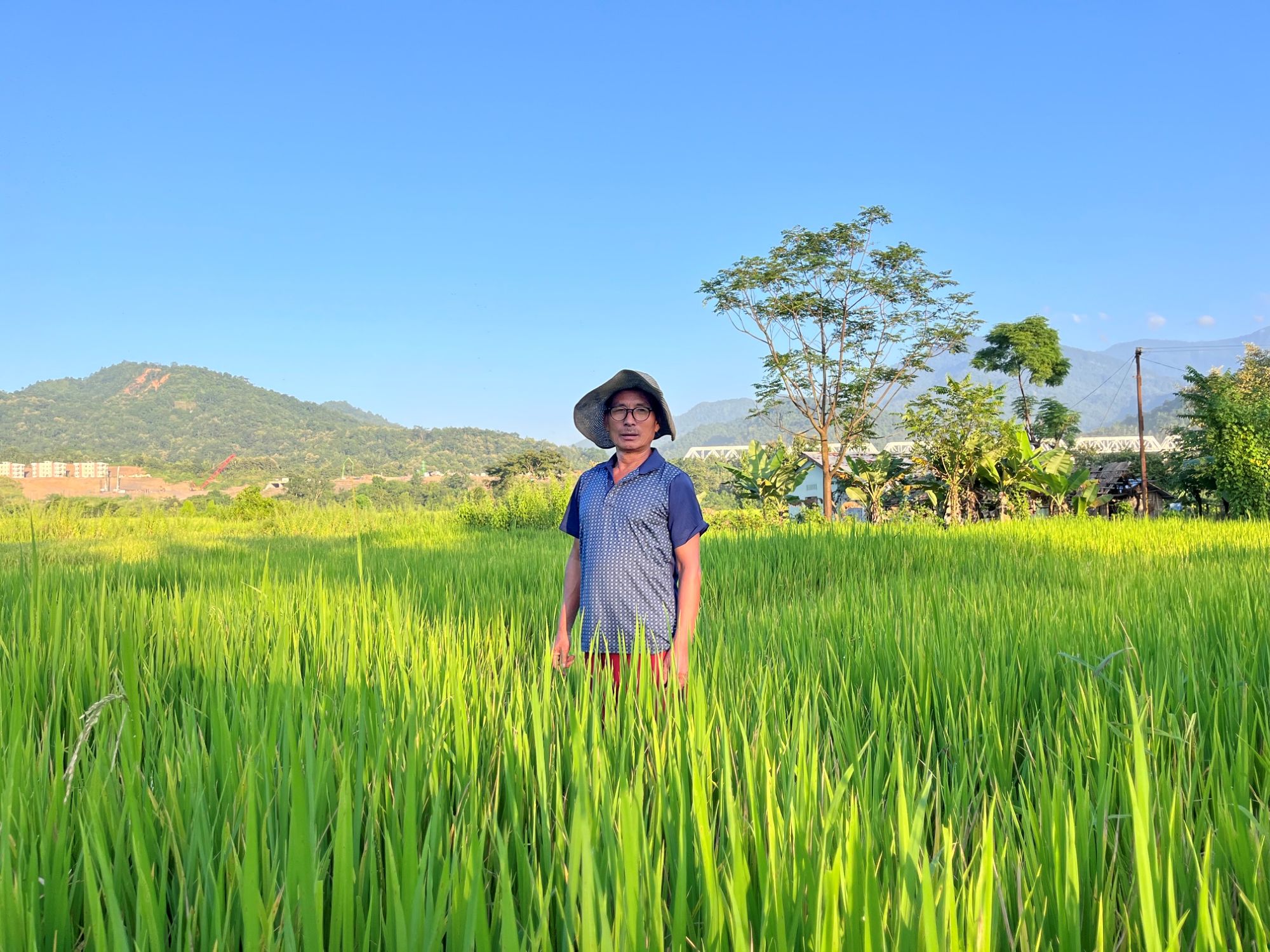
The practice has since spread through observation and word of mouth. According to Lasuh, nearly eight farming families in Peduzha village have adopted broadcasting after seeing its economic advantages.
Farming for family food security
Lasuh cultivates a leased plot of about 200 ft × 200 ft in Peduzha village. In exchange for using the land, he provides the owner with around 10 tina of paddy rice and straw each year.
The family grows the local rice variety “Nagaland Special” mainly for home consumption. Lasuh values it for its taste, cooking quality, and relatively early maturity. The family previously grew Ranjit and local glutinous rice varieties but gradually phased them out.
From transplanting to broadcasting
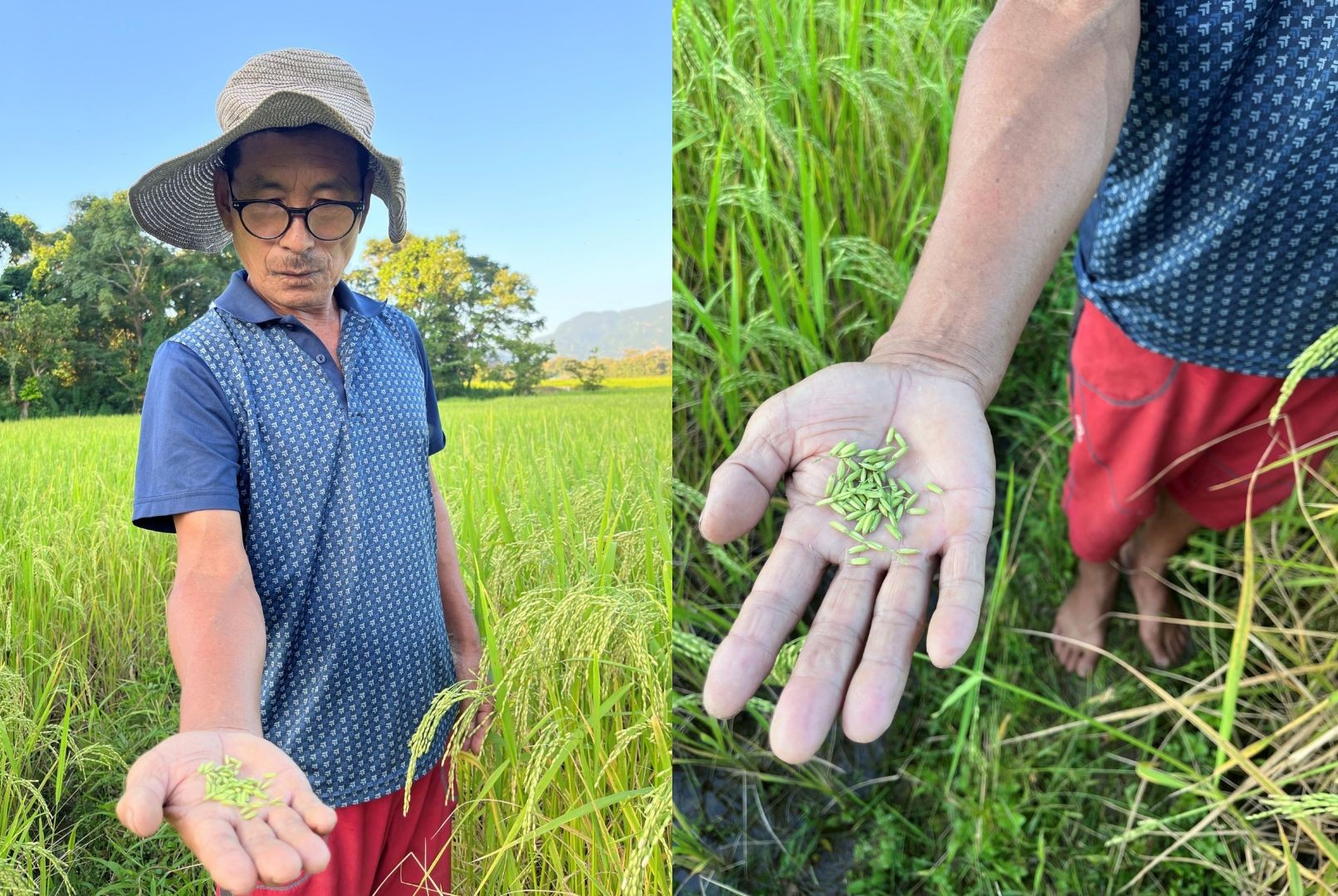
The family saves seed each season from the best-performing part of the field. The seed is manually threshed, stored in jute bags, and kept separately to maintain viability.
Before sowing, the seeds are soaked in water for about two days, then kept under shade in the same jute sacks for another two days until small white radicles emerge. Lasuh then broadcasts the germinated seeds evenly across the field.
“Broadcasting takes skill,” he explains. “You have to spread the seeds properly.”
To spread out harvesting and reduce losses, the family divides larger fields into two sections and broadcasts them a day apart.
Preparing the field
Good land preparation is central to successful broadcasting. Before flooding the field, Lasuh manually removes tall weeds. He then applies a pre-emergence herbicide and leaves the field for about a week. The land is puddled thoroughly with a power tiller under flooded conditions to suppress emerging weeds.
Excess water is drained until the soil reaches the right moisture level for broadcasting.
Weather, however, remains a major risk. Heavy rain immediately after sowing can wash away germinated seeds and result in poor crop establishment. Lasuh recently had to re-sow part of his field after heavy rainfall.
“The best condition is no rain on sowing day and for the next three or four days,” he says. “That allows the seedlings to anchor well in the soil.”
Managing weeds and nutrients
Weed control relies mainly on pre-emergence herbicides, supplemented by post-emergence herbicides when needed. Manual weeding is limited mostly to field alleys.
For nutrition, Lasuh prefers diammonium phosphate (DAP), applying it when yellowing symptoms appear. Although local input dealers once recommended other options, his own field experience convinced him to continue using DAP.
“DAP improves crop vigour without making the soil hard,” he says. “Repeated urea application does.”
Harvesting with less grain damage
Family participation remains important throughout the season. Male family members handle land preparation, bund construction, and power tiller operations, while female family members carry out seed broadcasting. This division of labour allows timely field operations with limited hired labour.
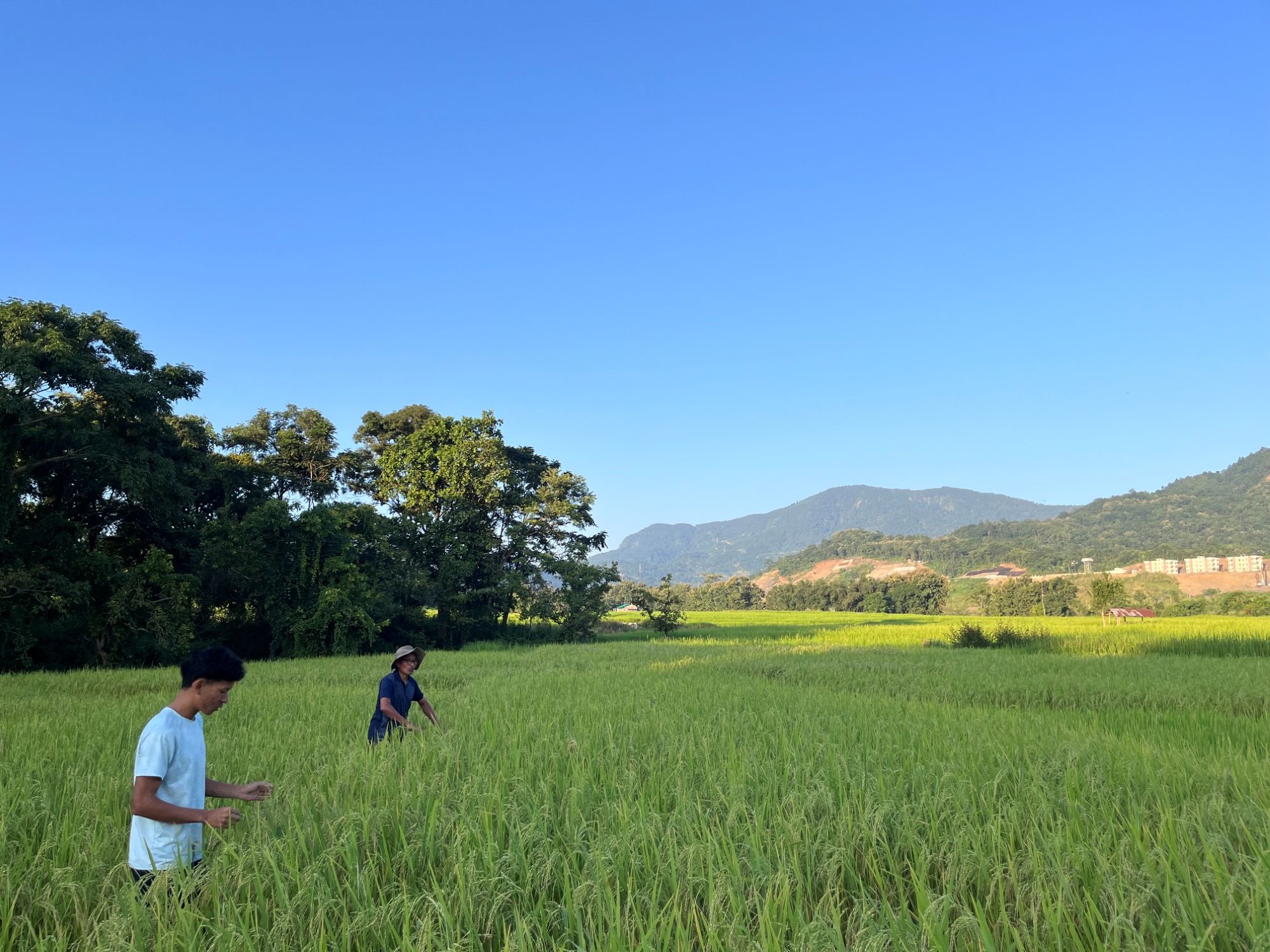
Harvesting practices have also evolved. The family initially dried harvested bundles on the soil and threshed them using a pickup vehicle because mechanical threshers were unavailable. The method caused excessive grain breakage and required considerable labour.
The family later shifted to using a power tiller for threshing, reducing grain damage and improving grain quality. Seed intended for the next season is still threshed manually to protect viability.
After threshing, the grain is sun-dried for about three days. Neem leaves are added to well-dried jute bags during storage to help control storage pests.
Remaining challenges
Broadcasting is not without risks. Unexpected rain after sowing remains the biggest threat, while birds, poultry, ants, grasshoppers, gundhi bugs, and rodents can occasionally damage the crop. The farmer also occasionally observes false smut and nutrient deficiency symptoms, although he reports that economic losses are generally low.
When pest or disease symptoms appear, farmers in the area traditionally drain excess water to help limit their spread.
A farmer-led innovation worth scaling
Lasuh’s experience shows that farmer innovation, grounded in local knowledge and practical field observation, can offer viable alternatives where labour scarcity threatens rice production.
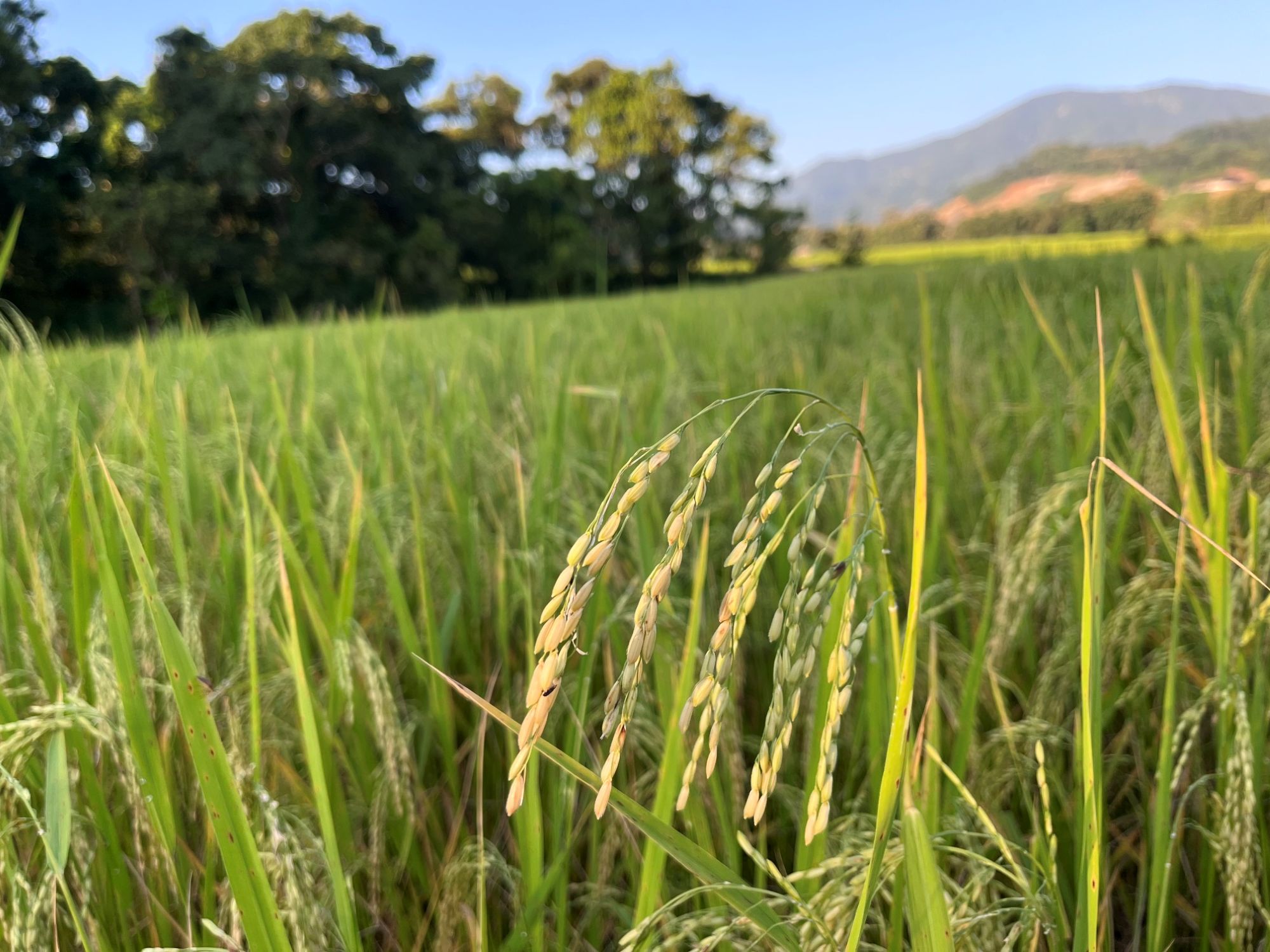
The key elements for success are careful seed handling, thorough land preparation, timely weed control, and favourable weather immediately after sowing. With appropriate technical refinement and extension support, broadcasting pre-germinated rice could offer a practical, lower-cost establishment option for smallholder farmers in similar rice-growing areas of Nagaland and Northeast India.
For Lasuh, the benefit is clear: less dependence on hired workers, more timely field operations, and rice farming that remains within the family’s reach.
Table 1. Farmer’s comparison of labour requirement and cost between transplanted rice and broadcasting of pre-germinated rice seeds in Peduzha Village, Nagaland, India
| Conventional Transplanting | Broadcasting (Direct-Seeded Rice) | Farmer’s Observation | |
| Daily wage (female labour) | ₹500–550 (5.28–5.80 USD) person⁻¹ day⁻¹ | Minimal hired labour | Labour costs avoided during transplanting |
| Daily wage (male labour) | ₹600–650 (6.33–6.86 USD) person⁻¹ day⁻¹ | Minimal hired labour | Labour costs substantially reduced |
| Additional labour expenses | Tea, snacks and lunch for labourers | Negligible | Further reduces production cost |
| Labour required for transplanting | High | Very low | Family labour sufficient for most operations |
| Estimated saving in transplanting cost | — | ₹3,000–4,000 (31.66–42.21USD) per crop | Reported by the farmer |
| Crop establishment | Nursery raising + transplanting | Direct broadcasting of pre-germinated seeds | Saves time and labour |
| Yield | Slightly higher under favourable conditions | Slightly lower or comparable | Economic returns considered similar because of lower production costs |
About the Authors:
- Dr. Virosanuo Solo (Corresponding Author) is a Junior Agronomist at ICAR-AICRP on Linseed, Medziphema Centre, School of Agricultural Sciences (SAS), Nagaland University, Nagaland, India. (virosolo74@gmail.com)
- Prof. T. Gohain is a Professor in the Department of Agronomy, School of Agricultural Sciences, Nagaland University, Medziphema Campus, Nagaland, India.
- Dr. Rokozeno is a Scientist (Entomology) at ICAR-AICRP on Kharif Pulses, School of Agricultural Sciences, Nagaland University, Nagaland, India.