- Rising day and night temperatures are threatening rice, wheat, and maize production by disrupting plant growth, grain filling, and grain quality, putting global food security at risk
- Precision breeding and genome editing offer ways to reprogram plant clocks, optimize flowering and panicle architecture, and protect grain quality under heat stress
- Combining genetic, structural, and digital innovations can provide an opportunity to develop climate-resilient cereals that can maintain yields and quality in a rapidly warming world
By Glenn Concepcion
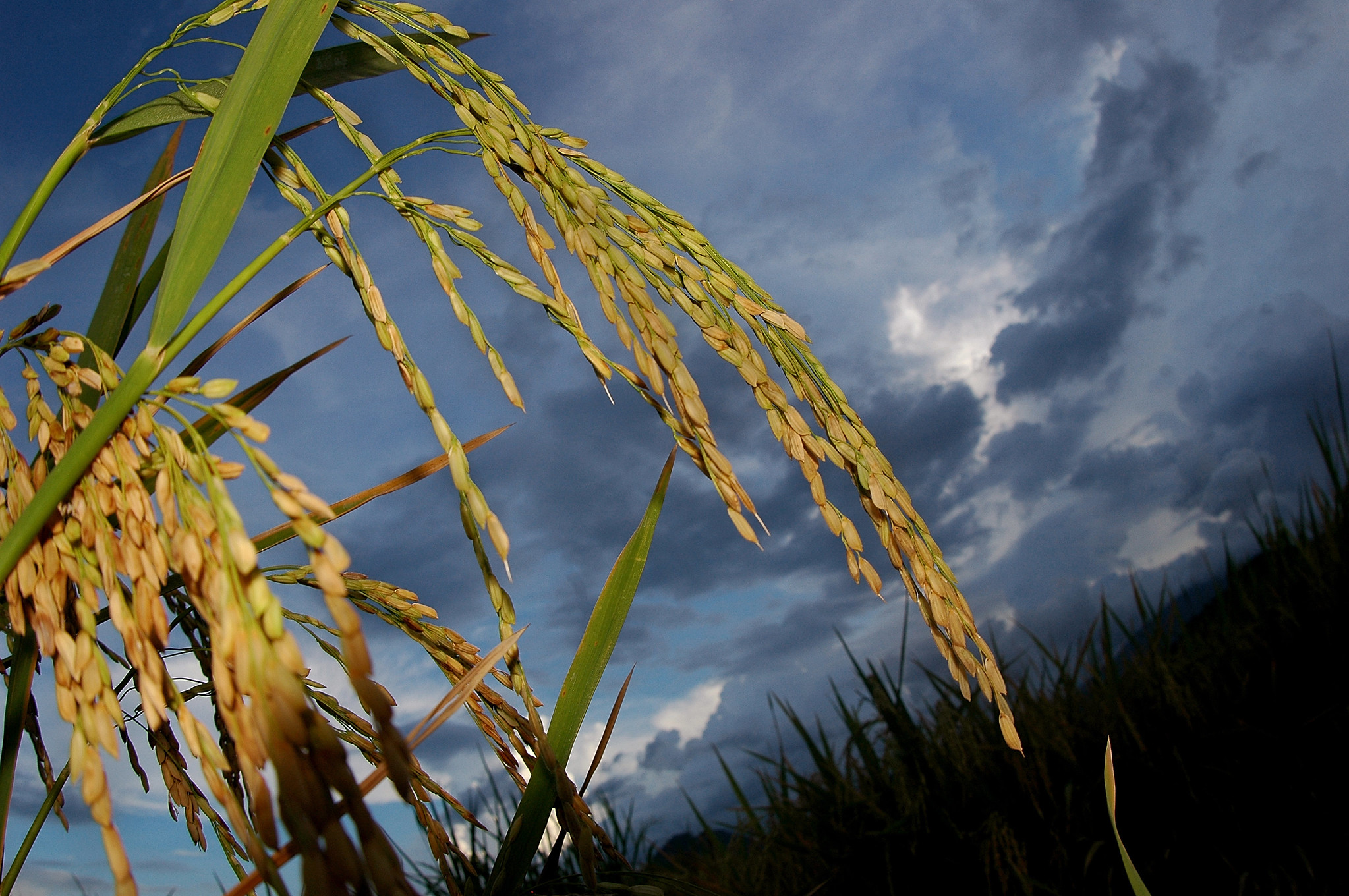
The world’s “cereal bowl”, or the production of rice, wheat, and maize, is under the dual challenges of a surging human population and a rapidly warming climate. As global temperatures rise, agricultural yields are failing to keep pace with demand, with scientists estimating that the rate of yield increase for these three staple crops must rise by a staggering 37% to ensure food security by 2050.
A particularly insidious and overlooked threat is the rise in high night temperatures, which are increasing nearly twice as fast as daytime temperatures. This nocturnal heat disrupts the delicate internal rhythms of plants, causing “source-sink” imbalances where the energy produced during the day is wasted through excessive respiration at night, ultimately leading to stunted grains and lower grain quality.
In a recently published review in Trends in Plant Science, scientists from the International Rice Research Institute and the Max Planck Institute of Molecular Plant Physiology analyzed how understanding the genetic regulation of flowering, plant architecture, and grain filling can provide a roadmap for developing climate-resilient varieties with sustained yield and grain quality. The authors argue that while the Green Revolution of the 20th century relied on stable, cooler climates, the current era requires precision breeding strategies to overcome the stagnation of crop production observed in low-income, food-deficit regions.
Reprogramming the plant’s biological clock
One of the most innovative solutions discussed in the review involves manipulating the plant’s circadian rhythm to help crops escape the worst of the heat. By identifying and tweaking “thermometer genes,” scientists can develop varieties that bloom earlier in the morning before temperatures peak.
In rice, for example, the gene OsMADS51 has been identified as a key factor in conferring thermotolerance during the critical heading and grain-filling stages. Similarly, in maize, researchers are targeting the “evening complex”, a group of genes including ZmELF3 and ZmLUX, which coordinates flowering and adaptation across different latitudes. By modifying these clock genes, breeders can ensure that the delicate process of flowering is promoted under heat stress.
Building a more efficient panicle architecture
Beyond timing, the inflorescence architecture of the plant can be re-engineered to maximize efficiency of grain number per panicle. The review highlights the potential of genes like DEP1 in rice, which produces dense, erect panicles that create a more favorable microclimate for the plant. These erect structures allow for better light distribution and photosynthetic rates, even under heat stress.
Furthermore, scientists are investigating the vascular highways of the plant, the bundles that transport sucrose to the developing grains. By identifying genes like SPIKE, GIF1, SPL14, and APO1-HI1, which increase the number of primary branches and vascular bundles, researchers can improve the “sink strength” of the grain, ensuring that nutrients are delivered effectively even when high temperatures threaten to disrupt the flow.
Editing genes for better grain quality
Molecular engineering offers perhaps the most precise game-changing tools for food security. The review details a breakthrough involving prime editing, where researchers introduced heat shock elements into the promoter of the rice gene GIF1. This targeted genetic modification increased the seed-setting rate by 10.5% under heat stress by enhancing the plant’s ability to move sugars into its grains.
Other molecular solutions focus on maintaining grain quality; high heat often results in chalky grains that are brittle and less valuable. The discovery of the QT12 gene, which acts as a negative regulator of grain quality, provides a target for breeders to switch off the pathways that lead to chalkiness under high temperatures.
Integrated innovations for holistic solutions
The review emphasizes that a holistic approach is required to implement these innovations at scale to address the yield penalty under combined high day and night temperature. This includes using geospatial modeling to monitor heat hotspots in real-time, allowing farmers and breeders to strategize when and where to deploy specific climate-smart varieties. Additionally, speed-breeding tools are being used to accelerate the development of next-generation cultivars, reducing the time it takes to bring heat-tolerant traits from the lab to the field. There are growing opportunities to deploy genome editing based precision editing to fine-tune the target genes controlling flowering, higher grain number, and better grain filling to address the challenges of a changing climate.
By combining these structural, temporal, and molecular innovations, the authors suggest it is possible to maintain a sustainable cereal bowl that meets the needs of a growing world without compromising on the grain quality of the staples, to meet market demand and sustain food and nutritional security.
Read the study:
Erstelle A. Pasion-Uy, Lawrence Yves C. Uy, Polavarapu B. Kavi Kishor, Alisdair R. Fernie, Nese Sreenivasulu
Sustained cereal bowl amidst global warming
Trends in Plant Science, Volume 31, Issue 1, 2026
https://doi.org/10.1016/j.tplants.2025.08.021