By Ranjitha Puskur
Climate finance is growing at an unprecedented pace. Governments, development banks and international donors are investing billions of dollars each year to help agriculture adapt to a changing climate. New irrigation systems are being built, climate-smart rice varieties are being developed, weather stations are expanding, and digital advisory services are reaching more farmers than ever before. Yet a fundamental question remains largely overlooked: Who is able to benefit from these investments, and why?
For many years, discussions around climate finance have focused on the volume of resources mobilized for adaptation and mitigation. However, a growing body of evidence suggests that the effectiveness of climate finance depends not only on how much money is invested, but on how investments are designed, who participates in decision-making, and whose priorities and knowledge shape adaptation pathways.
This is particularly important for rice-based food systems, where climate risks are becoming more frequent and severe while social inequalities continue to influence farmers’ ability to respond. Women contribute substantially to rice production across Asia and Africa, yet they often have less secure access to land, finance, extension services, technologies, climate information and markets. These inequalities limit their capacity to adopt climate-resilient practices, because they face structural barriers that climate investments frequently fail to address.
Looking beyond women as beneficiaries
Research emerging from the CGIAR GENDER Platform has fundamentally reshaped how we think about gender and climate resilience. Rather than treating women as a vulnerable group requiring special assistance, the evidence demonstrates that strengthening women’s agency is central to building resilient food systems.
Studies consistently show that women’s adaptive capacity depends on far more than access to technologies. It is shaped by decision-making power within households, control over productive resources, access to climate information and advisory services, participation in farmer organizations, mobility, time availability, and representation in local governance. Climate investments that overlook these dimensions often reinforce existing inequalities, even when they successfully deliver new technologies or infrastructure.
In other words, gender-responsive climate finance is not about allocating funds to women. it is about investing in the institutional, social, and knowledge systems that enable equitable adaptation. Rather than asking whether women are participating in climate projects, researchers are now asking whether climate investments are transforming the conditions that determine who can adapt, innovate and recover from climate shocks.
What does good practice look like?
Several programmes demonstrate what gender-responsive climate investments can achieve when they move beyond technology transfer alone.
- In Bangladesh, the Green Climate Fund’s coastal adaptation programme combined climate-resilient infrastructure with livelihood diversification, women’s leadership, local planning processes and institutional strengthening. Rather than focusing solely on physical assets, the programme invested in women’s capacity to participate in adaptation planning and benefit from new livelihood opportunities.
- Similarly, the International Fund for Agricultural Development’s (IFAD) Adaptation for Smallholder Agriculture Programme integrated gender throughout broader agricultural investments by linking climate adaptation with rural finance, producer organizations, climate-smart agriculture and extension services. Instead of creating separate ‘women’s projects’, gender considerations became part of mainstream investment design.
- UNDP’s Adaptation Fund Climate Innovation Accelerator (AFCIA) provided small grants directly to local organizations, many of which are women-led. The projects across 33 countries included women-led climate enterprises, resilient agriculture, ecosystem restoration, and community adaptation innovations where women and local organizations participate in deciding how adaptation resources are allocated, investments tend to be better aligned with local priorities, strengthen community ownership and deliver more sustainable outcomes.
Although these initiatives differ in geography and scale, they demonstrate that the most effective investments finance not only technologies and infrastructure, but also the institutions, capacities, and relationships that enable farmers to use them effectively.
The missing investment: climate intelligence
Despite this progress, an important gap remains. Much of today’s climate finance continues to prioritize financing physical assets like seed, irrigation, machinery, or infrastructure. Comparatively little attention has been paid to financing the systems that help farmers make informed decisions in an increasingly uncertain climate. Climate information illustrates this challenge.
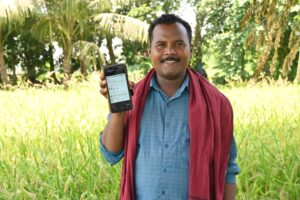
Across many rice-growing regions, farmers require more than seasonal forecasts. They need timely, trusted and locally relevant climate information that helps them decide when to transplant, irrigate, fertilize, manage pests or prepare for extreme weather events. Yet access to climate information remains uneven. Women farmers are consistently less likely than men to receive weather forecasts, participate in extension activities, or access digital advisory services, reducing their ability to act on climate information even when it is available.
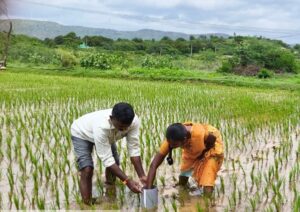
An emerging frontier for agricultural research and investment is therefore climate intelligence, the ability to generate, interpret, validate, and use climate information to support locally relevant decision-making. Investing in climate intelligence means moving beyond just financing weather stations and investing in the human and institutional systems that connect climate data with farmer action.
We need climate finance that supports women as community weather observers, citizen scientists, climate information champions and local advisors; strengthens farmer organizations to interpret forecasts, validate local observations, combine scientific information with local knowledge, and support community adaptation planning; strengthens the governance systems that ensure climate information reaches those who need it most and can be translated into meaningful action. Such investments would produce multiple benefits. Better climate information improves farm-level decision-making, while stronger local institutions increase trust, ownership, and resilience well beyond the lifespan of individual projects.
This also requires a different way of measuring success. Traditionally, climate investments have been evaluated using indicators such as hectares covered, infrastructure built, technologies disseminated, or farmers trained. However, climate finance should also measure whether investments strengthen people’s ability to anticipate, respond to, and recover from climate shocks.
A new frontier for rice research and investment
Rice systems are among the world’s most climate-sensitive production systems, supporting the livelihoods and food security of billions of people. Climate finance therefore has an unprecedented opportunity not only to finance improved technologies, but also to strengthen the social and institutional foundations that determine whether those technologies deliver lasting benefits.
Increasingly, the International Rice Research Institute (IRRI) is demonstrating that resilient agriculture depends not on individual technologies in isolation, but on gender-responsive socio-technical innovation bundles that combine improved varieties, climate information services, advisory systems, mechanization, inclusive institutions and collective action. Emerging work on hyperlocal climate information systems, participatory climate services, and locally led adaptation similarly recognises that climate resilience is built through partnerships between science, communities, extension systems, and local governance, and not through technology alone.
These approaches also redefine the role of women. Rather than treating them simply as recipients of climate-smart technologies, they position women as co-designers of innovations, validators of climate information, leaders within local adaptation processes and agents of change in their communities.
For rice-based food systems, the greatest returns may come not only from financing better technologies, but from investing in the people, knowledge systems, and inclusive innovation processes that determine whether those technologies transform livelihoods.
Dr. Ranjitha Puskur is a socio-economist and Principal Scientist at the International Rice Research Institute (IRRI), specializing in gender and livelihoods; climate change-gender-agriculture nexus, and Evidence to Policy.