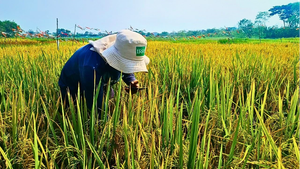
- Aerial multispectral and thermal imaging can reliably flag high-photosynthesis, high-yield rice at scale, transforming slow manual phenotyping into rapid field-wide screening.
- Integrating phenotyping with genetic marker data uncovered stable genetic regions and candidate genes that link photosynthetic efficiency and water-use traits.
- Existing donor lines carrying favorable haplotypes provide actionable entry points for breeders to accelerate development of higher‑yielding, climate‑resilient rice.
By Glenn Concepcion
By 2050, global demand for cereal grain is expected to surge by 50%, yet annual gains from rice breeding have stalled below 1%. A new study published in Current Plant Biology offers a promising path forward, using high-flying innovations to do a deep dive into the genetics of rice plants.
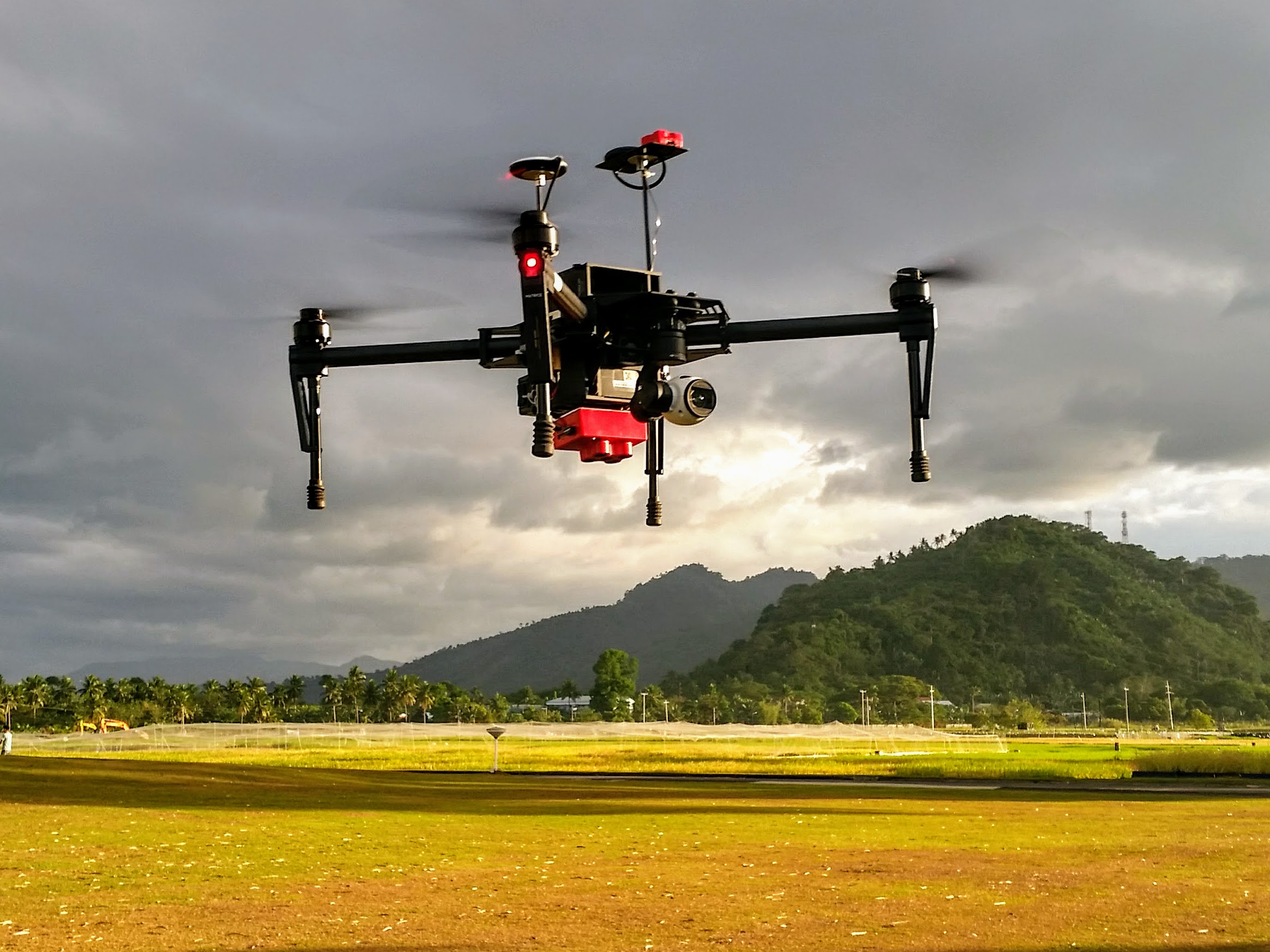
Researchers at the International Rice Research Institute (IRRI) in the Philippines combined drone-based imaging with field physiological measurements to study photosynthesis in over 300 indica rice varieties across three growing seasons. They found that integrating these technologies can be a powerful new toolkit for identifying rice plants that can do more with sunlight.
Phenotyping photosynthesis at scale
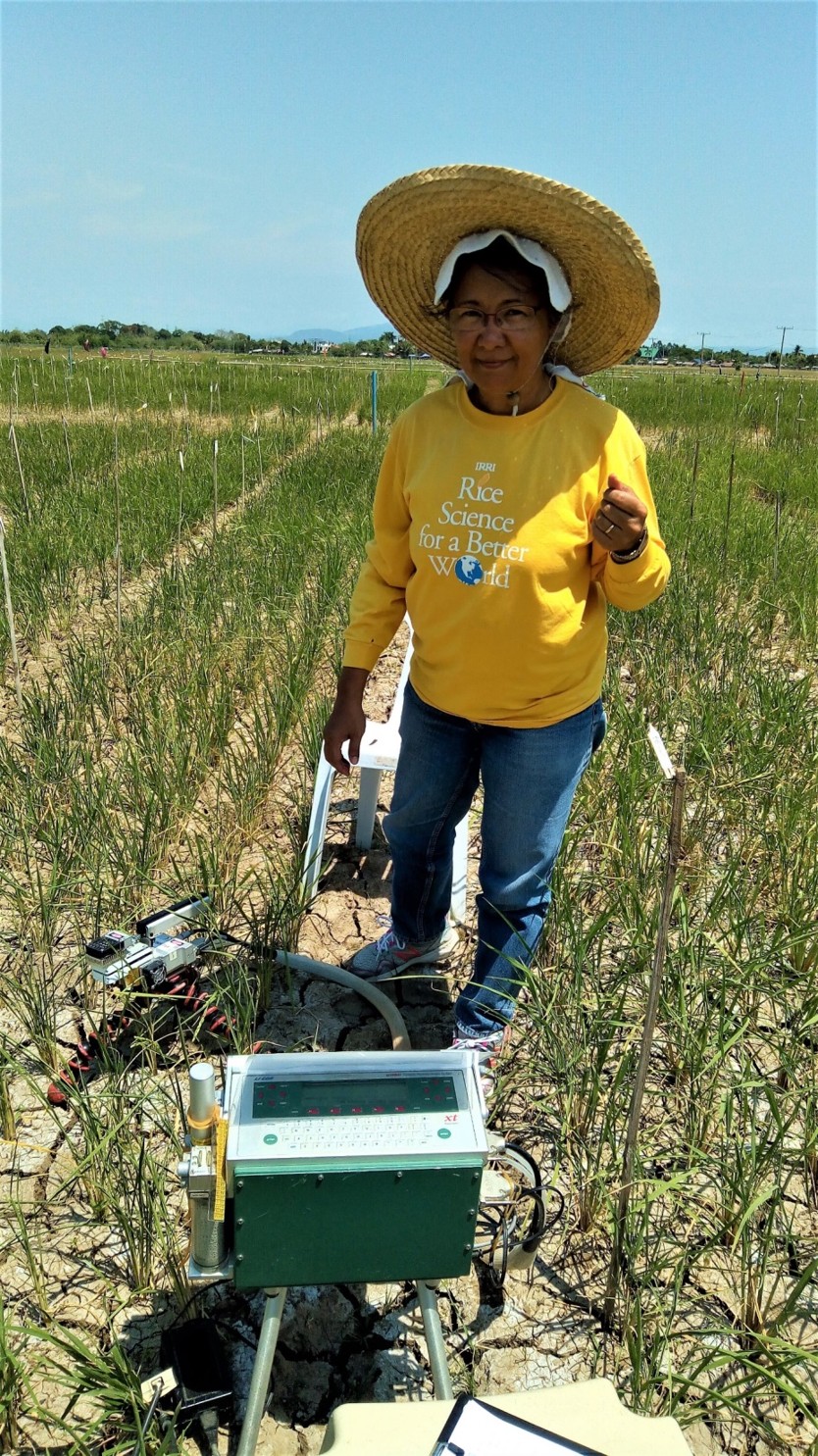
Every grain of rice begins with captured sunlight. The more efficiently a plant converts that light into sugars, the better it can grow and potentially be more high yielding. Yet photosynthesis is notoriously difficult to measure at scale. Traditional methods require researchers to individually test each plant with specialized instruments, a painstaking process that limits how many varieties can be studied.
“Manual phenotyping of photosynthesis-related traits in rice is labor-intensive,” the authors note, explaining the bottleneck that has slowed rice breeding progress in this field for decades.
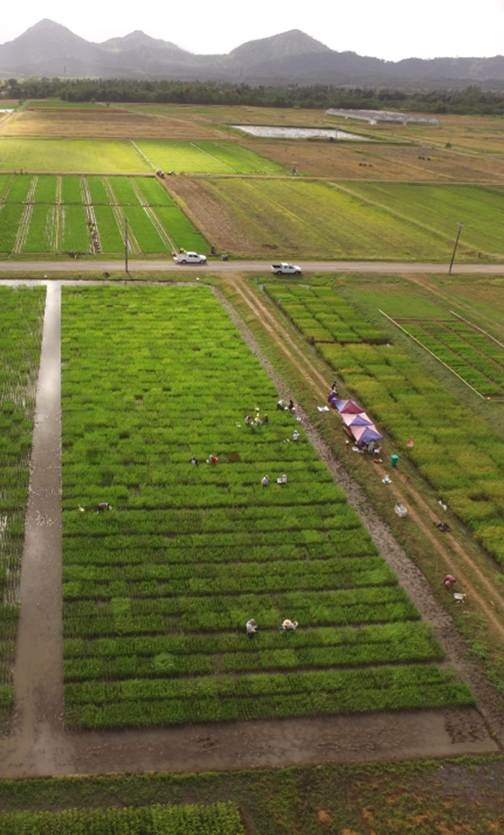
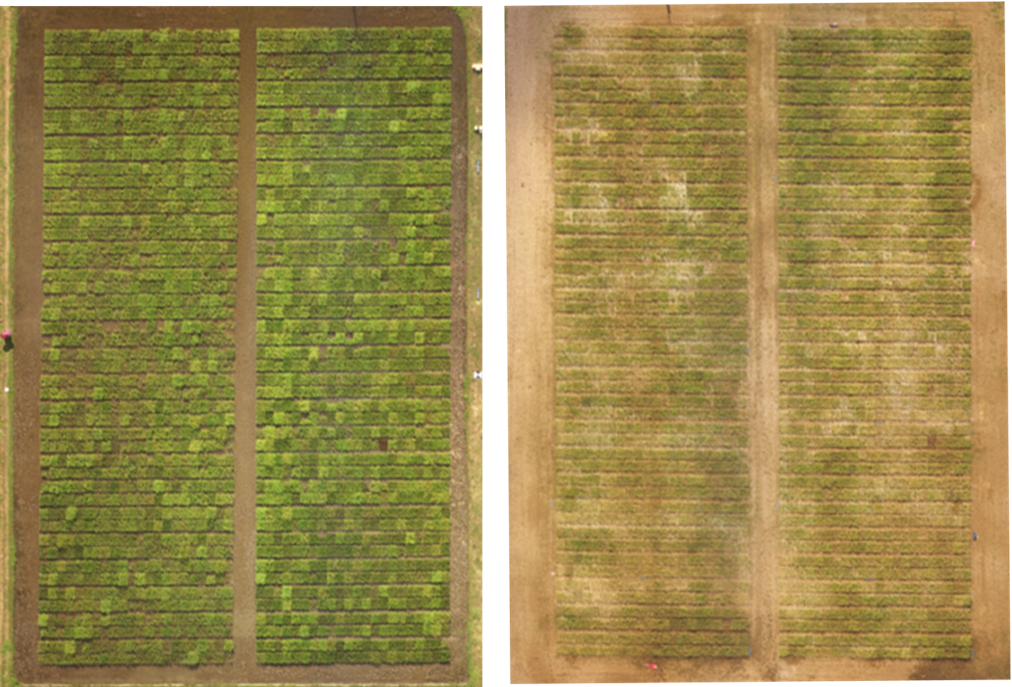
To address this, the team deployed unmanned aerial vehicles (UAVs) equipped with multispectral and thermal cameras, flying weekly over their experimental fields in IRRI Headquarters in Los Baños from planting through harvest. These drones captured the Normalized Difference Vegetation Index (NDVI), a measure of plant greenness and health, along with canopy height and canopy temperature for each plot.
NDVI and canopy temperature showed strong, consistent correlations with ground measurements of photosynthetic rate, stomatal conductance, and grain yield. In practical terms, a cooler canopy (indicating plants are actively transpiring water through their leaves) reliably flagged varieties with higher photosynthetic activity and better yields.
Predictive models using drone data explained up to 44% of the variation in stomatal density across varieties, demonstrating real screening power even without a single researcher stepping into the field.
Genetic clues hidden in the data
Beyond phenotyping, the team performed Genome-Wide Association Studies (GWAS), a technique that scans thousands of genetic markers to find variants linked to traits of interest across the 318 accessions studied. IRRI’s International Rice Genebank and genotypic data from the 3k Rice Genomes (available on SNPseek) were key resources that facilitated the GWAS, using the phenotypic data (now available in the IRRI Dataverse) that was generated in this study.
They identified multiple genomic regions, called quantitative trait loci (QTLs) associated with photosynthetic performance. One standout was qTRMMOL-2–2, a transpiration-rate QTL that appeared consistently across two separate growing seasons — a rare sign of genuine genetic stability in a trait known for environmental sensitivity.
Most excitingly, two candidate genes emerged. OsWAK6, a wall-associated receptor-like kinase, was linked to higher photosynthetic rates. A specific mutation in this gene was associated with measurably better carbon assimilation. Meanwhile, OsHAK1, a potassium transporter, was tied to transpiration rates, with implications for how efficiently rice uses water, a critical trait as climate patterns grow more erratic.
High-performing varieties
Among the 318 accessions studied, 17 varieties consistently ranked in the top 30 for photosynthetic rate across multiple years. These high performers tended to have denser stomata, higher grain yields, and interestingly, shorter stature. They also disproportionately carried favorable genetic variants at multiple photosynthesis-related loci, suggesting their traits are genetically robust, not just environmentally lucky.
One variety, FACAGRO 64, a known heat-tolerant indica line, stood out by carrying superior haplotypes at all identified photosynthesis QTL regions, making it a compelling candidate as a breeding donor for improving photosynthetic efficiency in commercial rice. The next steps will be to evaluate the frequency of those favorable QTLs in the current elite breeding pool.
A foundation for sustainable systems
The researchers are clear about the limitations of the study: drone data explained only a portion of the variation in individual plant photosynthesis, and more advanced machine-learning models will require larger datasets to improve. Still, the framework they’ve established, using aerial surveillance to prioritize which plants deserve deeper physiological study, represents a big leap in breeding efficiency.
The implications of this research extend far beyond the laboratory. By identifying the specific genetic markers that lead to better photosynthesis and higher yields, breeders can now use marker-assisted selection to rapidly develop new rice varieties without waiting years for field results.
“We view this work as establishing a baseline resource for dissecting the genetic and physiological architecture of photosynthetic performance in rice,” the authors conclude. “As climate change continues to shift global rainfall and temperature patterns, the ability to rapidly identify and breed rice that can thrive in harsh conditions will be vital for maintaining global food stability.”
By combining a variety of new technologies with deep insights into the rice genome, this study helps provide a blueprint for a more productive and resilient agricultural future.
Read the study:
Hsiang-Chun Lin, Jacqueline Dionora, Dmytro Chebotarov, Ma. Rebecca Laza, Ma. Elizabeth B. Naredo, Pauline A. Muyco, Stephen Klassen, Amelia Henry, W. Paul Quick, Kenneth L. McNally
Diversity of photosynthesis-related and high-throughput phenotyping traits in indica rice
Current Plant Biology, Volume 47, 2026
https://doi.org/10.1016/j.cpb.2026.100613
Access the data:
https://dataverse.harvard.edu/dataset.xhtml?persistentId=doi:10.7910/DVN/X8HWWB
Forthcoming publication: A sister study looking at high-photosynthesis, high-yield rice under drought conditions is in the pipeline for publication.
Chatterjee J, Dionora MJ, Laza MR, De Ocampo M, Muyco PM, Naredo MEB, Natividad M, Quintana MR, Chebotarov D, Klassen S, Quick WP, Henry A, McNally KL.
Rice leaf structural adjustment to sustain photosynthetic traits under drought and produce more grain: evidence from field studies of the 3K indica panel