- Beyond low-emission rice adoption, countries need credible evidence and monitoring systems to turn changes in the field into measurable climate action.
- This is Part 2 of a two-part feature based on reflections from the Accelerating Low Emission Rice Production Review and Planning Workshop.
By Christian Dohrmann
Low-emission rice is often discussed as a question of changing farming practices. But changing what happens in the field is only part of the challenge.
When governments create the right conditions, markets provide incentives, and farmers adopt different practices, how do we know if progress really happened?
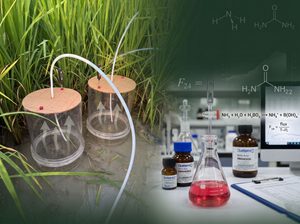
Dr. Bjoern Ole Sander, IRRI Senior Scientist for Climate Change and Thailand Country Representative, highlights monitoring, reporting, and verification (MRV) as an important part of the transition to low-emission rice. Through MRV, data from low-emission practices can move from individual fields to national statistics and government systems—making them usable for national planning, greenhouse-gas accounting and NDC implementation.
Low-emission rice therefore becomes not only an agricultural challenge, but also a challenge of evidence.
Building MRV systems in Southeast Asian countries
Indonesia
Dr. Anggri Hervani, Deputy Director, Indonesian Center for Agricultural Land Resource Engineering and Modernization, Ministry of Agriculture, showed why the problem is not simply collecting more data. Indonesia has already established information on rice area and varieties, while national data on practices such as straw management and Alternate Wetting and Drying (AWD) are still being strengthened.
With Indonesia’s highly diverse farming systems, the challenge is also ensuring that data collected in different locations and seasons can provide a representative national picture.This requires knowing much more than how much rice was harvested or how many hectares were planted. Countries need information on what took place in the field, whether land remained continuously flooded or went through drying periods, how straw was managed, when fertilizer was applied and whether AWD was implemented as intended.
Cambodia
Mr. Ith Chumnan, Vice Head-In-Charge, Department of Planning and Statistics, Ministry of Agriculture, Forestry and Fisheries, illustrated the same issue in Cambodia. The country already collects rice area, production and yield through national systems, while information on water and straw-management practices is not yet routinely captured at the same scale. Project-level data can provide important evidence, but additional work is needed before such information can support nationally representative estimates.
A farmer may change water or straw management, but the farmer does not decide how national data systems are designed, which institution collects information, how it is verified or how results enter national reporting.
Philippines
Dr. Eduardo Jimmy P. Quilang, Deputy Executive Director, Philippine Rice Research Institute, Department of Agriculture, described a similar divide. The Philippines already has extensive production and biophysical information, while nationally representative estimates for some management practices, including straw handling and field water regimes, are still being developed. Strengthening these data can help national greenhouse-gas inventories rely more closely on observed local conditions.
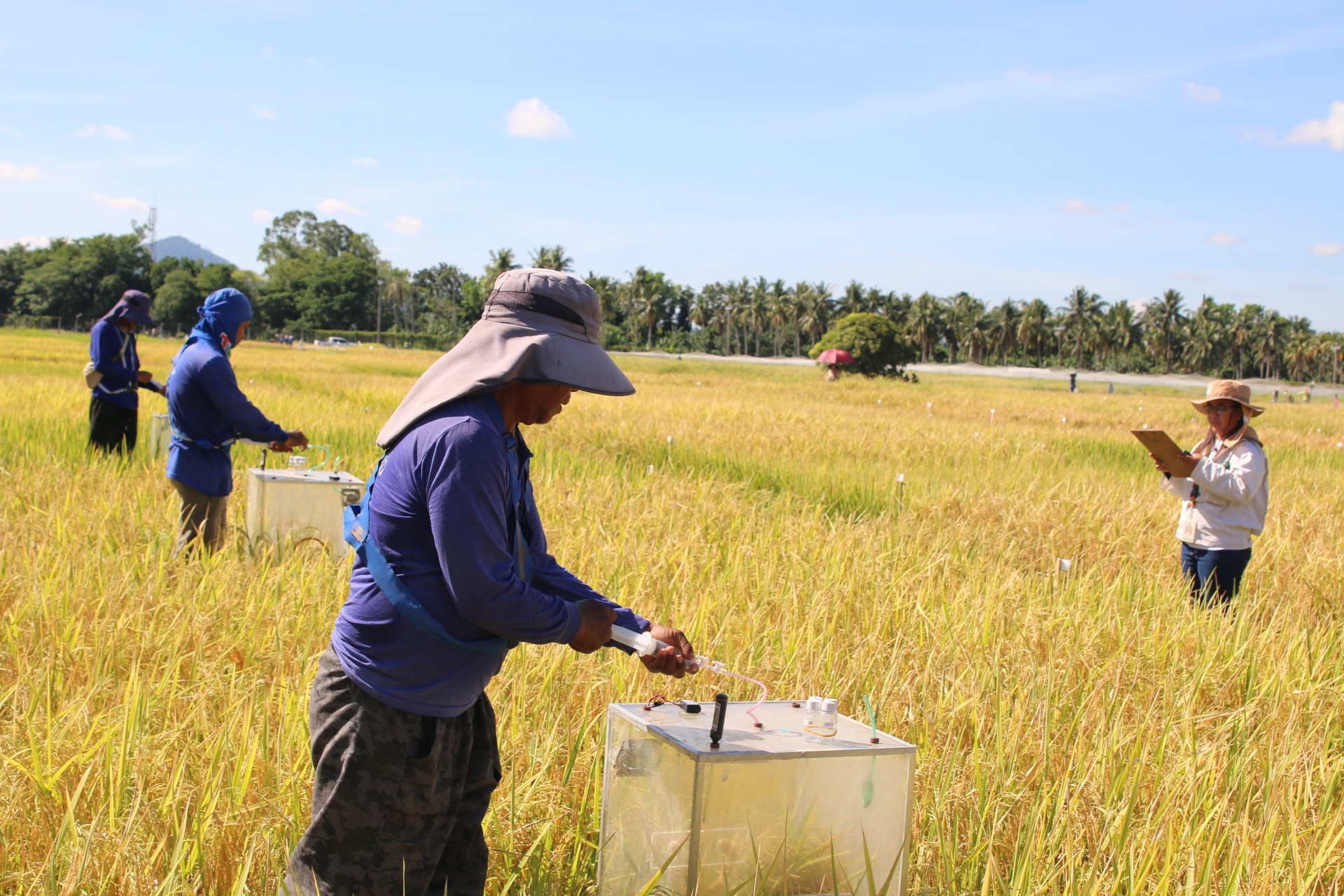
Different tools can help close these gaps. Existing agricultural surveys can incorporate additional variables, digital systems can record practices closer to real time, and remote sensing can identify whether fields are dry or flooded over large areas.
None provides a complete answer on its own. Satellites may miss shorter drying events or fail to show the degree of drying, making field observations and sensors important for validation. The challenge is therefore less about finding one perfect technology than combining different sources intelligently.
The workshop also showed that many of the most difficult issues are institutional as well as technical. The Philippines highlighted the need for smoother data sharing across agencies. Indonesia pointed to the resources required for accurate data collection and stronger interoperability between systems. Viet Nam described the challenge of linking detailed project information with broader national statistics. Cambodia emphasised the importance of consistent methods and clearer institutional roles, while Thailand highlighted the need to integrate datasets held across different agencies.
Agriculture rarely sits within a single administrative system. Production statistics, irrigation, environmental reporting, research and national climate commitments may all be handled by different organisations.
Thailand
Thailand’s experience, presented by Dr. Orathai Jaituy, Director of Foreign Relations and Special Project Group, Rice Department, Ministry of Agriculture and Cooperatives, illustrates this. The Office of Agricultural Economics holds official production statistics, the Rice Department collects additional crop and water information, and the Land Development Department provides soil data. Thailand is now piloting a digital system through which field practices can feed into national emissions accounting and reporting.
Vietnam
Viet Nam offers another example. Dr. Mai Van Trinh, Director, Environmental Modelling and Climate Change, Institute for Agricultural Environment, described a distinction between ordinary production statistics and the more detailed information collected through mitigation projects. Demonstration sites can capture water regimes, straw management and fertilizer use through mobile applications and sensors. The challenge is to connect that detailed information effectively with national systems and reporting requirements.
This is where monitoring, reporting and verification become more than a technical exercise. Their purpose is not simply to produce another database. Governments need evidence to understand whether programmes are working, where investment is needed and whether national climate commitments are being achieved.
Dr. Yen Tan Bui, IRRI Climate Change Scientist, presented one approach through a digital system designed to standardise rice activity data from local to national level and link it with greenhouse-gas calculations. Local actors provide activity data, quality checks take place at higher administrative levels, and the results can feed both carbon projects and national greenhouse-gas inventories.
Credibility becomes increasingly important as low-emission rice becomes connected to public investment, climate finance, carbon markets and emissions claims. Evidence must therefore be consistent, representative, verifiable and produced through methods that can be repeated.
No single institution controls that entire chain. Farmers know what happens in their fields. Agricultural agencies hold production and irrigation information. Statistical offices build national estimates. Researchers develop methods and emission factors. Environment ministries need evidence that can support national climate reporting.
The challenge is not simply to collect more data. It is to connect the right information, from the right places, through institutions and methods that make the results credible and nationally useful.
Low-emission rice becomes visible as climate action only when changes in the field can be translated into evidence that countries can trust and use.
Farmers may change the practice. But demonstrating the result is a responsibility shared far beyond the farm.
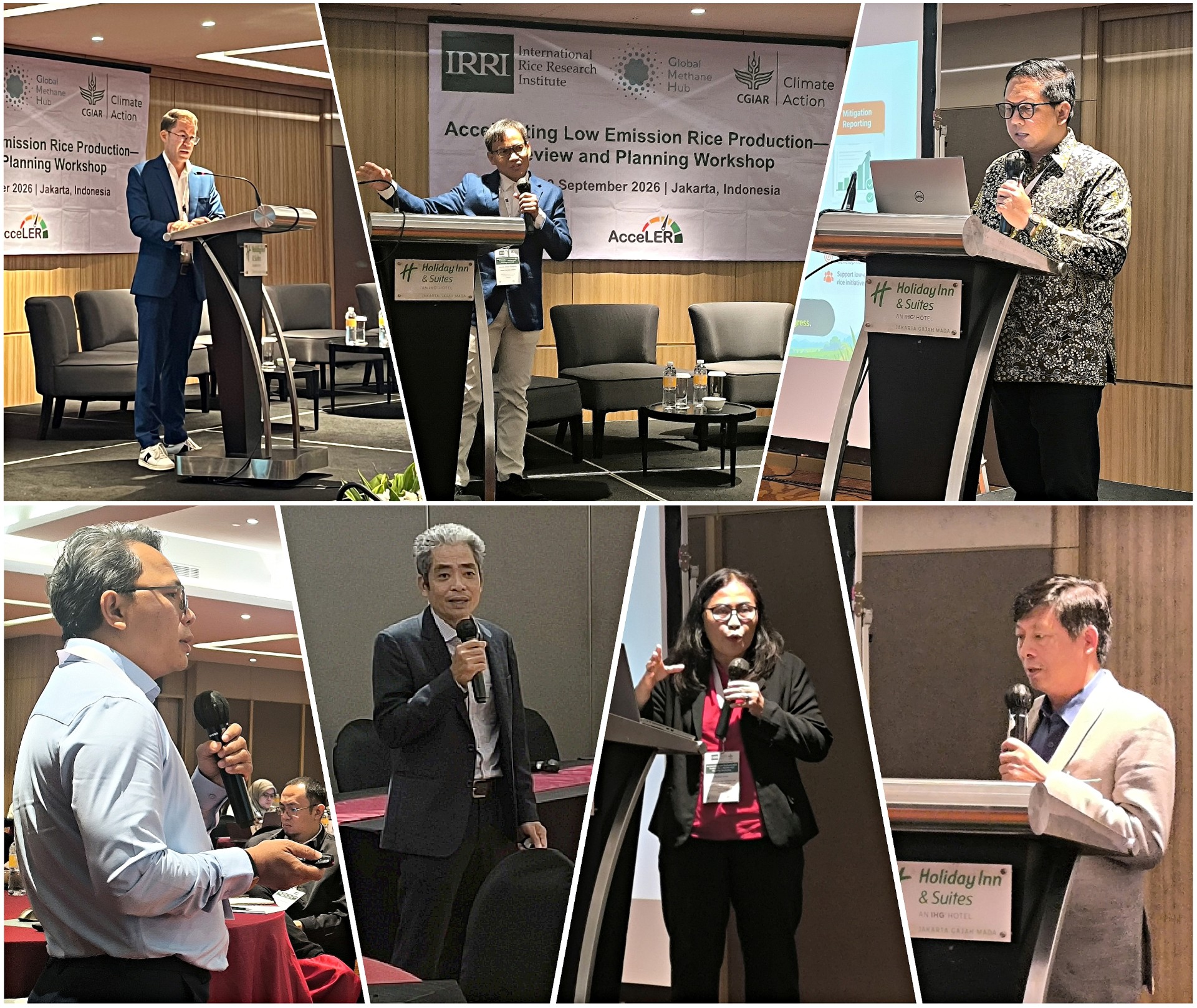
These reflections emerged from the Accelerating Low Emission Rice Production Review and Planning Workshop, held in Jakarta, Indonesia, on 29–30 September 2026.
The workshop brought together government representatives from Cambodia, Indonesia, the Philippines, Thailand and Viet Nam, with observers from Lao PDR and Malaysia, alongside IRRI and regional and international partners, to discuss methane-reduction roadmaps, financing, national MRV systems and data cooperation. The workshop was convened under IRRI’s Accelerating scaling of Low-Emissions Rice (AcceLER) project, which is financially supported by the Global Methane Hub.