- Intensive rice systems steadily accumulate total soil carbon and nitrogen, but the quality of this organic matter degrades, resulting in a 21-29% reduction in the soil’s natural nitrogen-supplying capacity over time.
- Additionally, high-yield farming leads to severe depletion of exchangeable potassium, while phosphorus tends to accumulate when fertilizer inputs exceed crop needs.
- To sustain long-term productivity, the researchers recommend periodic soil aeration to restore nitrogen mineralization, reinforced potassium fertilization, and the strategic utilization of existing phosphorus stocks in soils.
By Glenn Concepcion
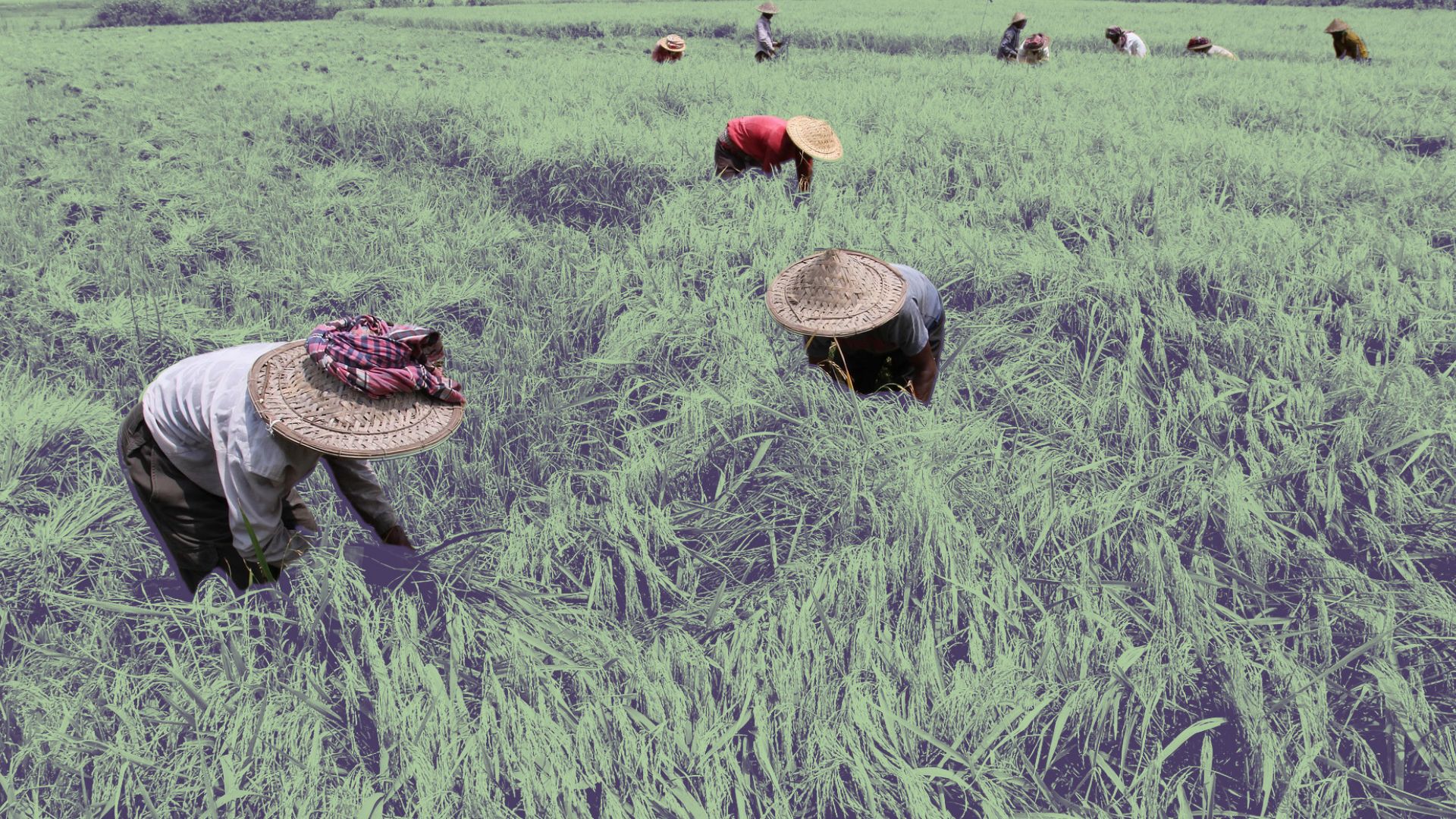
For more than half of the world’s population, rice is the essential food staple that sustains daily life. To meet the demands of a growing global population, farmers in tropical Asia have shifted to intensive cultivation, often harvesting two or even three crops per year from the same plot of land. However, a landmark study published in Field Crops Research reveals a troubling “soil fertility paradox” that threatens the long-term sustainability of these vital food systems.
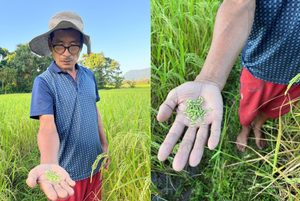
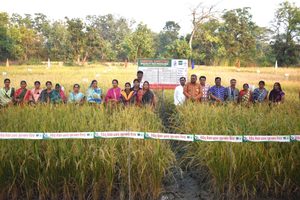
Researchers from the Japan International Research Center for Agricultural Sciences (JIRCAS), the International Rice Research institute (IRRI), and the Philippine Rice Research Institute (PhilRice) analyzed over 30 years of archived soil samples from two major long-term experiments in the Philippines: the Long-Term Continuous Cropping Experiment (LTCCE) of IRRI, which uses a triple-rice system on clay-heavy soil; and the Long-Term Fertilizer Experiment (LTFE) of PhilRice, a double-rice system on silty soil.
Their findings suggest that while these fields are technically “sequestering” carbon, the quality of the soil is degrading in ways that hide a growing dependence on chemical fertilizers.
The carbon accumulation illusion
In the world of climate science, increasing soil organic carbon (SOC) is generally considered a victory. Because rice paddies are kept flooded in an anaerobic (oxygen-deprived) environment, the decomposition of organic matter is significantly slowed down. The study found that in the triple-rice system, total carbon (TC) and total nitrogen (TN) levels increased steadily at a rate of 0.017% to 0.024% per year.
Remarkably, this accumulation occurred even though all aboveground plant residues, such as rice straw, were completely removed from the fields after every harvest. The researchers attribute this growth to “internal” inputs: root biomass and aquatic life like algae and nitrogen-fixing bacteria that thrive in the flooded environment. On paper, the soil was getting “richer” every year.
Unusable nitrogen
The paradox lies in the fact that while the total “bank account” of nitrogen was growing, the “available” nitrogen—the portion plants can actually use—was in freefall. In the triple-rice system, the ratio of available nitrogen (AN) to total nitrogen (TN) reduced significantly between 1985 and 2019.
This qualitative degradation occurs because constant flooding creates a stagnant chemical environment. Without oxygen, organic matter turns into “chemically recalcitrant” compounds, such as phenolics, which lock nitrogen away in a form that rice plants cannot access. Using Principal Component Analysis (PCA), the researchers proved that rice yields were tied to these short-term available nutrients rather than the massive, locked-away carbon stocks. As the researchers noted, the current high yields are being “maintained primarily by external nutrient applications, which are effectively masking the underlying decline in indigenous soil fertility”.
Potassium mining
While nitrogen management is a well-known challenge, the study highlighted an underappreciated risk: the depletion of potassium (K). Rice plants in high-yield systems require massive amounts of potassium, but when straw is removed and not returned to the soil, the plants begin “mining” the soil’s natural mineral reserves.
In the most intensive fields, exchangeable potassium levels plummeted over the decades. By 2019, levels in high-yield plots fell below the critical deficiency threshold of 0.2 cmolc kg⁻¹, meaning its nutrient-holding capacity has been greatly diminished. This happened despite the large amount of potassium supplied through irrigation water (~400kg/ha annually) showing just how much of this nutrient these crops consume. Unlike nitrogen, which can be “unlocked,” once these mineral potassium reserves are gone, they are difficult to replace without heavy fertilization.
Phosphorus savings
There was, however, a silver lining regarding phosphorus (P). The study found that phosphorus tends to accumulate in the soil whenever fertilizer inputs exceed what the crop removes. Interestingly, this process is partially reversible. When farmers reduced phosphorus applications, the crops were able to tap into the “legacy P” stored from previous years, causing soil P levels to stabilize or decline. This suggests that farmers could potentially save money and reduce environmental runoff by strategically “mining” their own accumulated phosphorus stocks.
Rethinking the paddy
To break the cycle of the fertility paradox, the study suggests a shift in how we manage intensive rice-growing areas. The researchers propose three key strategies:
- Strategic aeration: Periodically drying out the soil through techniques and/or rotation with upland crops. This allows oxygen back into the soil, breaking down the recalcitrant “junk” organic matter and releasing locked-away nitrogen. However, increased aeration may also accelerate soil organic carbon decomposition and potentially reduce soil carbon stocks over time. Therefore, such practices should be applied judiciously to balance short-term nutrient availability with long-term soil carbon conservation.
- Smarter P management: Utilizing accumulated soil phosphorus as a “stock” to reduce the need for new fertilizer applications.
- Reinforced K fertilization: Adjusting fertilizer recipes to specifically replace the potassium removed during harvest, preventing the soil from being “mined” into exhaustion.
Why this matters
This isn’t just an issue solely for farmers; it’s about the resilience of the global food system. If the most productive rice lands in the world are losing their natural ability to grow crops, the cost of food could rise, and the environmental footprint of farming could grow as more chemical inputs are required.
The soil fertility paradox serves as a stark reminder that in agriculture, quantity does not always equal quality. By looking beyond the surface-level carbon numbers and heeding the clues hidden in these 30-year-old soil samples, scientists hope to help farmers transition toward a future where intensive production and soil health can go hand-in-hand for a more sustainable food production system.
Read the study:
Tomohiro Nishigaki, Miwa Arai, Takanori Okamoto, Olivyn Angeles, Wilfredo B. Collado, Kazuki Saito
Long-term soil carbon accumulation and nutrient depletion under intensive chemical fertilization in tropical rice systems
Field Crops Research, Volume 342, 2026
https://doi.org/10.1016/j.fcr.2026.110490