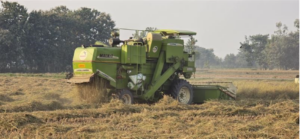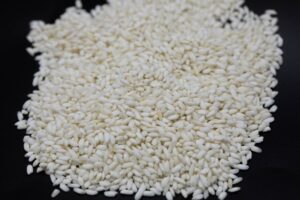
- NSIC Rc 222 is a widely adopted rice variety valued for its high yield, adaptability, and resilience across Philippine farming systems. However, its main limitation is eating quality, as the rice tends to have a harder texture, especially when cooled.
- To address this, the eating quality of NSIC Rc 222 was improved in NSIC Rc 784 by modifying the Waxy gene while maintaining the same strong field performance.
- The improved variety delivers softer rice, stable yields, and stronger consumer preference, making it a better option from farm to table.
By John Damien Platten1, Myrtel Anne Valenzuela 1, Katreena Titong 1, Frodie Waing2, Lenie Quiatchon3
- 1 International Rice Research Institute
- 2 Department of Agriculture-Philippine Rice Research Institute (DA-PhilRice)
- 3 University of the Philippines Los Baños
For more than a decade, NSIC Rc 222 has been a trusted rice variety for Filipino farmers. Since its release in 2009, it has earned its place in rice fields across the country due to its strong yield performance, adaptability, and resilience under diverse growing conditions.
Recognizing its widespread use and importance, the Philippines’ Bureau of Plant Industry – National Seed Industry Council (NSIC) has approved an improved version of this variety, now released as NSIC Rc 784, commercially known as ‘NSIC Rc 222 Malambot’ (Tubigan 64).
A trusted farmer favorite, but with one key limitation
NSIC Rc 222 has long been valued for its strong field performance. It can produce 6-10 t/ha and perform well under both transplanted and direct-seeded systems, making it suitable for changing labor and water conditions in rice farming.
The variety also shows moderate resistance to destructive pests such as brown planthopper and green leafhopper, as well as diseases including blast, bacterial blight, and tungro virus. In addition, it can tolerate stagnant flooding, allowing it to adapt across a wide range of rice-growing environments.
Because of these strengths, NSIC Rc 222 consistently ranks among the top three most preferred inbred rice varieties in many regions of the Philippines, according to the DA-Philippine Rice Research Institute (PhilRice).
Despite its strong agronomic performance, however, the variety has one long-standing limitation in eating quality. With an amylose content of around 25–26%, the cooked rice tends to become firm and dry as it cools. In the Philippine market, where soft texture strongly influences consumer preference, this has affected its market value, with the variety often selling at a lower price compared with softer rice types.
Improving eating quality without changing field performance
To address the long-standing eating quality limitation of NSIC Rc 222, the Department of Agriculture-Philippine Rice Research Institute (PhilRice), the University of the Philippines Los Baños (UPLB), and the International Rice Research Institute (IRRI) collaborated through the OneRicePH Project to improve grain quality while preserving the variety’s original strengths. The team focused on the Waxy gene, which regulates amylose content and influences the softness or firmness of rice after cooking. Using a version of the gene from a traditional rice variety, they developed a softer rice type without affecting the yield, adaptability, or resilience that made the variety widely preferred by farmers.
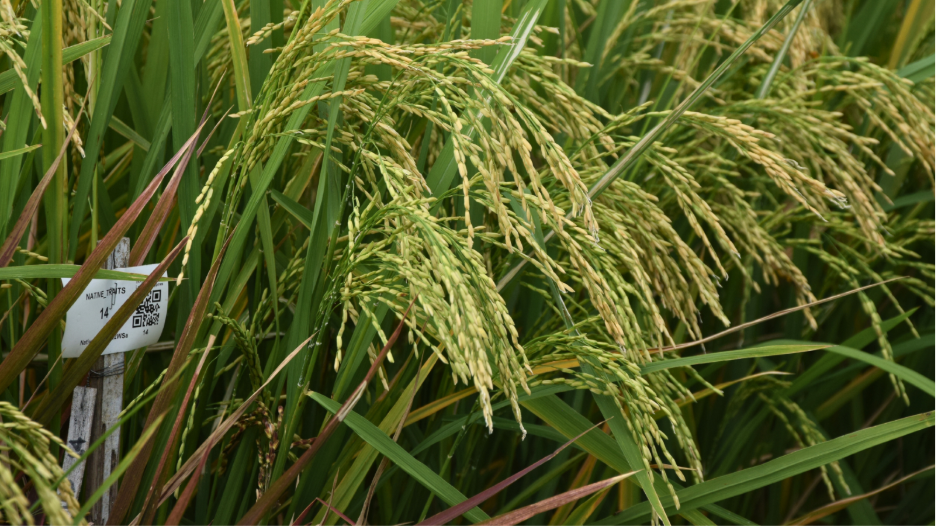
Field performance of the original NSIC Rc 222 (left) vs Improved NSIC Rc 222 (now NSIC Rc 784) (right)
The resulting improved line, NSIC Rc 784, is more than 99.97% genetically identical to the original variety. It retains the same plant height, growth duration of 114–118 days, and stable performance under both direct-seeded and transplanted conditions. Field evaluations under the National Cooperative Tests of DA-PhilRice further showed that the improved variety performed on par with, and in some locations even better than, the original line. During the 2024 wet season, it recorded yield increases of up to 7% over NSIC Rc 222 acrossed sites.
Yield performance of NSIC Rc 784 (IR20X1019) vs NSIC Rc 222 as the standard check in NCT
The major improvement lies in grain quality. NSIC Rc 784 has a lower amylose content of about 21%, producing softer rice that remains tender even after cooling. Consumer preference tests conducted during the National Biotechnology Week at UPLB and the 3rd National Agriculture and Fisheries Technology Exhibition (NAFTE) in Mandaue, Cebu, showed strong approval for the improved variety, with 94.19% of participants preferring it for its softer texture and better eating quality. Separate trained panel sensory analysis conducted by PhilRice also supported the improved eating quality of NSIC Rc 784.
Better outcomes from farm to table
For farmers, NSIC Rc 784 (Tubigan 64) offers the same reliable yield and field performance they trust, now with better market value due to improved grain quality.
For consumers, it delivers softer, more palatable rice that better matches Filipino eating preferences.
The improved NSIC Rc 222 is part of the OneRicePH Project, a collaboration among the Department of Agriculture (DA), DA-PhilRice, IRRI, and UPLB, supported by the DA–National Rice Program (DA-NRP) through the Bureau of Agricultural Research (DA-BAR).
Related reads:
Philippine Rice Research Institute. (2025). NSIC Rc 222 remains top inbred rice pick among farmers. https://www.philrice.gov.ph/nsic-rc-222-remains-top-inbred-rice-pick-among-farmers/