- In sub-Saharan Africa, women provide 60–80% of agricultural labor but face a productivity gap exceeding 30% due to time poverty and systemic barriers to land, credit, and quality inputs.
- Digital tools and mechanization offer a path to reduce physical drudgery and bypass information asymmetry by providing tailored, site-specific advice directly to female farmers.
- To prevent a widening digital divide, gender-inclusive policies, sustainable public financing, and capacity building led by female facilitators are needed.
By Glenn Concepcion
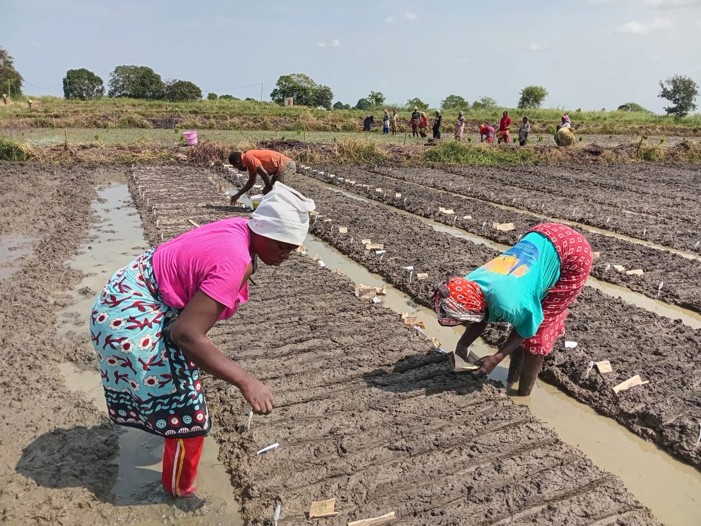
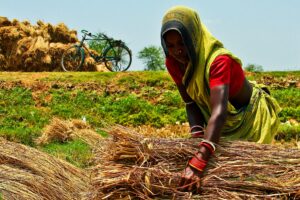
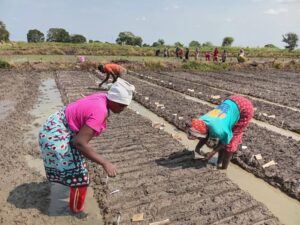
In the agricultural landscapes of sub-Saharan Africa (SSA), women are the unrecognized engine of food production. They provide between 60% and 80% of the total labor input in smallholder farming systems, which in turn account for 80% of the region’s agricultural output.
Yet, despite their central role, these women face a systemic productivity gap that stalls economic progress and threatens food security. In Chapter 3 of the recently published book “Precision Agriculture in Africa”, the first book of its kind on precision agriculture in Africa, International Rice Research Institute (IRRI) scientists Dr. Pauline Chivenge and Dr. Melanie Connor explore whether the rise of precision agriculture (PA) will serve as a bridge to equity or a new barrier to inclusion.
Women bear the brunt of unpaid work
Farms managed by women in SSA are significantly less productive than those managed by men, with gender productivity gaps often exceeding 30%. Specifically, studies in Mali show productivity on women-managed farms is 20% lower, while the gap reaches 28% in Malawi and 10.6% in Ethiopia.
These figures are not a reflection of skill but of structural disadvantages. Women have less access to high-quality seeds, fertilizers, credit, and land rights. Perhaps most critically, they suffer from acute “time poverty”. A time poverty headcount index in Mozambique revealed that 50% of women are time-poor, compared to just 8% of men.
Because agricultural extension and advisory services have historically been designed to cater to male farmers, women are frequently excluded from the technical guidance necessary to implement precision techniques. Consequently, without the means to acquire specialized knowledge, women remain tethered to the manual drudgery of weeding and harvesting, which frequently results in irreversible back injuries later in life.
A potential digital game-changer
Precision agriculture—the use of data to tailor management decisions to specific fields—offers a potential escape from these constraints. Historically, agricultural extension services in SSA have been designed and operate in environments catering to male farmers, leaving women in a state of information asymmetry.
Dr. Chivenge and Dr. Connor highlight the transformative potential of Digital Decision Support Tools (DSTs). Platforms such as RiceAdvice, Rice Crop Manager, and Nutrient Expert provide site-specific nutrient management recommendations that have been shown to increase yields and profits without necessarily requiring more inputs. With mobile phone penetration exceeding 80% in countries like Kenya, Nigeria, and Ethiopia, these tools offer a cost-effective way to deliver expert advice directly to women in remote areas.
The authors also discuss the role of Artificial Intelligence (AI), such as the Kenyan startup UjuziKilimo, which uses predictive analytics to optimize resource use. For a resource-constrained woman farmer, the precision afforded by AI can maximize the return on every kilogram of fertilizer or liter of water.
Shifting the labor balance through mechanization
While digital tools provide the data, mechanization provides the heavy lifting to reduce drudgery. In SSA, over 90% of farming operations are manual. A multi-country study (including Ethiopia, Ghana, Nigeria, and Tanzania) found that the use of tractors and combine harvesters caused a significant shift for women from grueling on-farm activities to more profitable non-farm activities. By automating land preparation, PA-enabled mechanization can afford women the decent work and time flexibility needed for their well-being.
Barriers to inclusion for women
The authors, however, warn that technology is not a neutral savior. Without careful implementation, precision agriculture risks creating a new technological gap.
One primary hurdle is the literacy gap. While girls’ primary school completion rates have improved (66% for girls vs. 61% for boys in 2020), the current farming population is aging, and many women remain disadvantaged. In SSA, the male literacy rate is 72.5%, compared to 59.4% for women. This disparity can make navigating complex digital interfaces difficult for female farmers.
Furthermore, financial constraints remain a major bottleneck. Most digital extension models currently rely on subscriptions, which can create a divide between those who can pay and those who cannot. Since women often lack access to finance and control over household income, subscription models are not efficient from a social point of view. There are also technical barriers: phone sharing, accidental deletion of apps, and a lack of electricity to charge devices.
A call for “gender-intentional” design
Dr. Chivenge and Dr. Connor conclude that to bridge the gap, precision agriculture must move from “gender-neutral” to “gender-intentional” programming. This means explicitly targeting women in seed and technology promotion and utilizing female facilitators, as women are often more successful in societies where information is provided by other women.
The authors recommend that governments prioritize gender-inclusive policies that explicitly mention women in their benchmarks. This includes public sector financing for digital extension to remove the cost barrier and the development of mechanization solutions specifically tailored to tasks traditionally assigned to women. By deliberately removing the traditional biases that disadvantage women, African nations can ensure that the next agricultural revolution is a tool for true empowerment, rather than another source of disparity.
Read the chapter:
Pauline Chivenge, Melanie Connor
Does Precision Agriculture Create a Technological Gap Between Genders—An African Perspective
From the book “Precision Agriculture in Africa” edited by Steve Phillips and Kwame Agyei Frimpong
https://doi.org/10.1007/978-3-032-20660-2_3