- An international team of researchers evaluated the rice breeding programs of IRRI and NARES partners across Indonesia, Vietnam, Nepal, and Thailand from 2000-2022.
- The findings show rice breeding delivers a high return on investment, making public rice R&D one of the most economically effective investments.
- With climate risks, urbanization, and slowing yield growth, the shrinking of public R&D funding can threaten future food and economic security.
By Glenn Concepcion
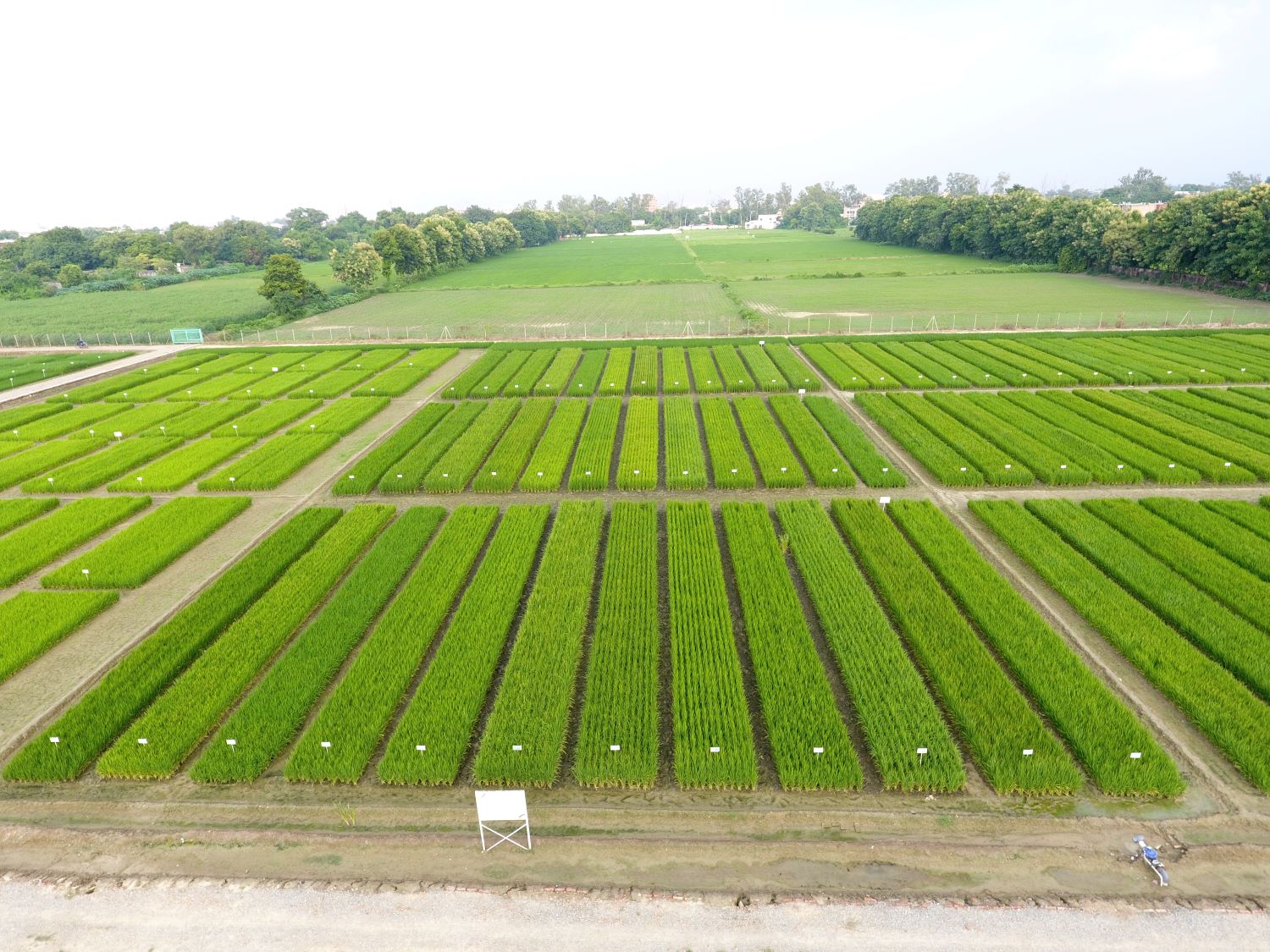
Rice is a cornerstone of food and economic security in Asia, with over 3.5 billion people consuming rice as a daily staple and 1.2 billion relying on rice value chains for their livelihoods. Yet despite its critical importance, public expenditures on agricultural research and development (R&D) have been steadily declining, falling from 0.5% of agricultural Gross Domestic Product (GDP) in 2000 to just 0.43% in 2022, a figure far below the 2% benchmark recommended by international organizations.
A new study published in the Journal of Agricultural and Resource Economics provides a compelling economic case for renewed focus and funding on rice R&D. Evaluating 23 years (2000-2022) of economic returns of rice varietal improvement programs across four Asian countries (Indonesia, Nepal, Thailand, and Vietnam), the findings offer a definitive conclusion for policymakers: public investment in rice R&D is among the most rewarding investments, with yield gains far exceeding research costs and returning as much as hundreds of dollars for every one dollar spent in some countries.
The methodology of the study
Performed by an international team of researchers from Arizona State University, Southeast Asian Regional Center for Graduate Study and Research in Agriculture (SEARCA), International Rice Research Institute (IRRI), Vietnam Ministry of Agriculture and Environment, Thailand Rice Department, Indonesian Center for Food Crops Research and Development, and the Alliance of Bioversity-CIAT, the study focuses on the returns on investment in rice breeding from collaborative partnership between the International Rice Research Institute (IRRI) and its National Agricultural Research and Extension Systems (NARES).
The IRRI-NARES partnership functions as a shared innovation engine, where IRRI provides high-quality genetic germplasm, and national scientists in NARES adapt these varieties to local conditions, specific climates, and regional market preferences.
To estimate the economic return on investing in rice breeding, the researchers used a standard approach that examines how improved technologies shift the supply curve of a crop and how that shift translates into economic gains for producers and consumers. In practical terms, this means estimating how much higher yields or lower production risks new varieties create and then converting those changes into dollar values over time.
The study used the “geometric rule” to attribute economic gains to the specific germplasm provided by IRRI versus other sources. This approach traces a variety’s pedigree to isolate the specific impact of IRRI’s research within local seeds. This approach ensures that both IRRI’s breeding efforts and the “last-mile” adaptation by national programs are recognized.
Economic benefits
The empirical findings of the study are definitive. The researchers calculated the following indicators to determine how much wealth the breeding investments generated for the four nations:
- Benefit-Cost Ratio (BCR): the return for every dollar spent
- Internal Rate of Return (IRR): annualized compounded return rate
- Net Present Value (NPV): total net economic benefit generated
Indonesia: Even though Indonesia’s public research spending has fallen substantially, the country has captured substantial gains from improved rice varieties. The study reports a BCR of 247:1, meaning that every dollar invested returned $247 in economic value. The NPV was approximately $37.25 billion, and the IRR was estimated at 172%. Two main factors explain these large numbers: the widespread adoption of IRRI-linked varieties across farming systems and strong yield improvements that increased production and reduced the need for imports.
Vietnam: Vietnam has transformed its rice sector since economic reforms in the 1980s, becoming one of the world’s top rice exporters. Improved varieties released in the Mekong and Red River Deltas played a big role in raising productivity and export volume. The study finds a BCR of 112:1, an IRR of 204%, and an NPV of roughly $2.46 billion. For Vietnam, these breeding gains also support foreign-exchange earnings and rural livelihoods tied to export crops.
Thailand: Compared with its neighbors, Thailand keeps a relatively higher share of GDP invested in agricultural research. The breeding programs examined showed a BCR of 6:1, an IRR of 63%, and NPV of $2.50 billion. Those returns are important for Thailand to remain competitive in premium markets such as jasmine and long-grain rice, where quality matters as much as quantity.
Nepal: Nepal faces structural pressures such as rapid urban growth, the loss of farmland in hill areas, and labor migration from agriculture. Despite these challenges, the country benefited from stress-tolerant varieties that can better withstand drought and flooding, a trait that is becoming increasingly important in the changing climate. The study estimates Nepal’s BCR at 4:1, IRR at about 36%, and NPV at about $65 million. Those returns reflect both direct yield gains and reduced crop losses from extreme weather events.
Why this matters
The study’s findings arrive at a time when several pressures are mounting on rice systems. Climate change is increasing the frequency and severity of droughts, floods, and salinity intrusion in many rice-growing regions, which raises the value of varieties bred for stress tolerance. Urban expansion and migration are reducing the land and labor available for farming in some places, making productivity gains from improved genetics more crucial to maintaining output. In several countries, observed yield growth rates are slowing, suggesting that new science-led innovations are needed to push yields higher or make production more reliable.
The research also highlights how the strategic utility of rice breeding varies with a nation’s trade position. For import-dependent nations like Nepal and (pre-2025) Indonesia, improved seeds act as a defense against global price shocks and reduce annual import bills by billions of dollars. For export-oriented nations like Thailand and Vietnam, R&D is a lever for trade competitiveness, helping secure their place in international markets and supporting the livelihoods of millions of smallholders.
The risk of disinvestment
Despite its high returns, public investment in agricultural research remains below the levels recommended by international bodies in many countries. The study warns that continued decline in public funding is creating a systemic risk. If governments cut research budgets, the pipeline for new, climate-resilient, and higher-yielding varieties will slow, leaving farmers and consumers exposed to the twin risks of stagnating productivity and increasing climate variability.
This funding gap also comes at a dangerous time. Agricultural systems are facing unprecedented pressures from climate change, rapid urbanization, and a growing population. Without a renewed commitment to funding, the productivity gains that have lifted millions out of poverty could begin to crumble.
A strong case for policy action
The findings of this study over the last two decades provide economic justification for prioritizing public science and for continuing strong partnerships between international research centers like IRRI or other CGIAR centers with national research systems.
The authors conclude that rice R&D should not be viewed as a mere budget expense, but as a primary driver of poverty reduction and rural transformation. They call for a reversal of the declining investment trend in some countries, urging policymakers to prioritize funding for stress-tolerant and climate-resilient varieties. To pull back on public investment now would be to ignore one of the most successful economic and humanitarian success stories in modern history.
Read the study:
Ashok Mishra, Rowell Dikitanan, Kenichi Kuroiwa, Tran Thi My Hanh, Krishna Joshi, Ithipong Assaranurak, Hasil Sembiring, Robert Caudwell, Bjoern Sander, Robert Andrade, Valerien Pede
Evaluating Returns on Investment in Rice Breeding: Evidence from Selected South and Southeast Asian Countries
Journal of Agricultural and Resource Economics
https://jareonline.org/articles/evaluating-returns-on-investment-in-rice-breeding-evidence-from-selected-south-and-southeast-asian-countries/