By transforming agricultural waste into mushrooms, compost, and low-emission rice production, Mr. Dong Van Canh and the New Green Farm Cooperative created a sustainable circular enterprise that lowered farming costs, generated new revenue streams, and expanded local employment opportunities in Vietnam.
“The circular model gives farmers more than one way to earn.”
When Mr. Dong Van Canh looked across the rice fields around New Green Farm Cooperative, he saw something farmers had long treated as an unavoidable end to every harvest: piles of straw. Most of it was burned. Some were incorporated into flooded fields, where decomposition could affect water and soil quality.
The cooperative, established in 2023 with seven core members, was still finding its footing. Its main activities were rice and vegetable production. Straw mushrooms were grown using traditional methods in small, fragmented plots that were highly vulnerable to weather and other environmental conditions. Only five members were directly involved, and income came mainly from rice and limited mushroom production.
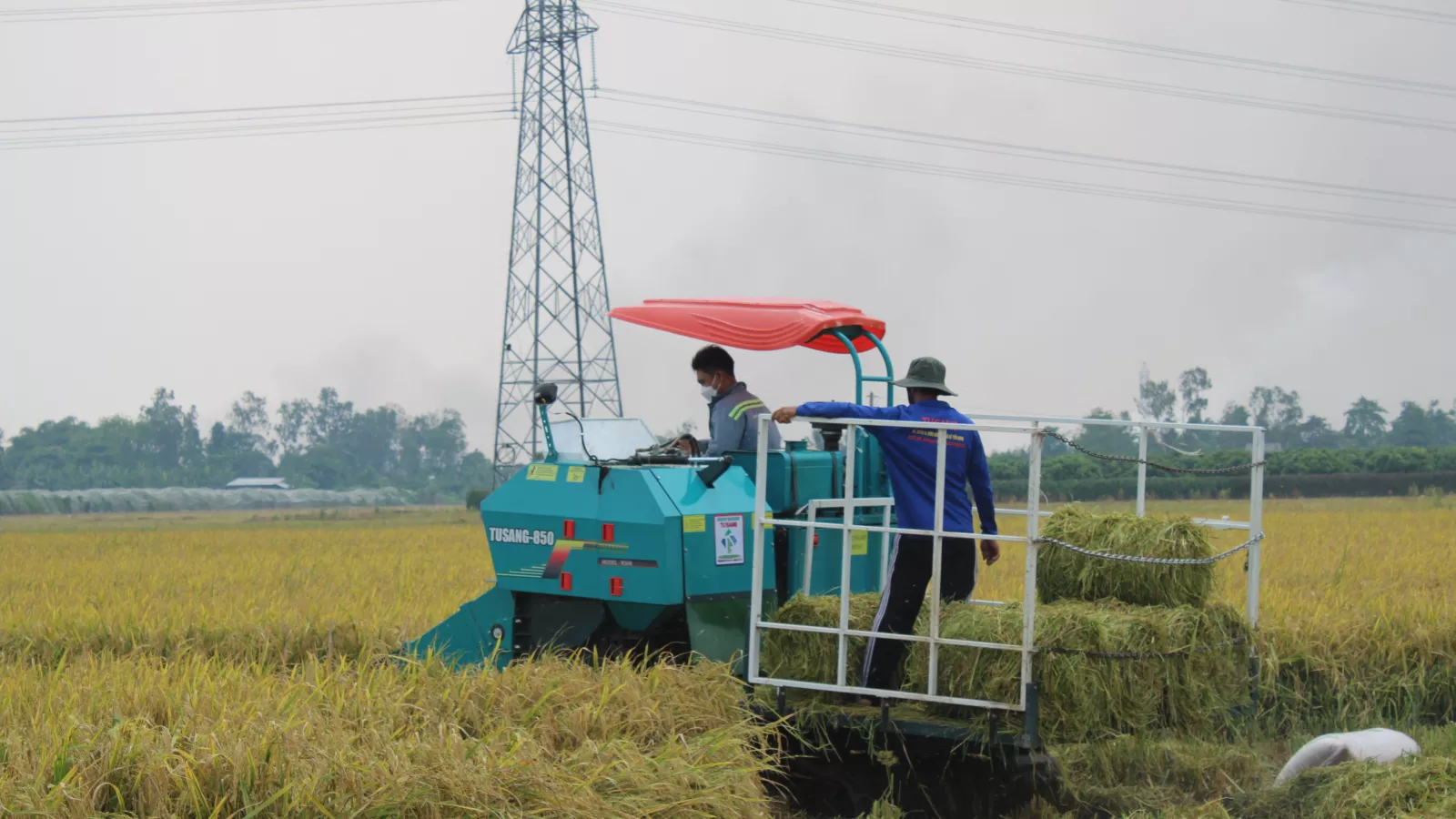
The machine was what first convinced him that another model was possible. Through work involving the International Rice Research Institute (IRRI) and its partners, New Green Farm was introduced to mechanized rice-straw composting and a wider circular business approach. Rather than treating straw as waste, the cooperative could collect it, use the freshest material to cultivate mushrooms, transform spent mushroom substrate and other agricultural residues into organic fertilizer, and return that fertilizer to rice, fruit trees, and vegetables.